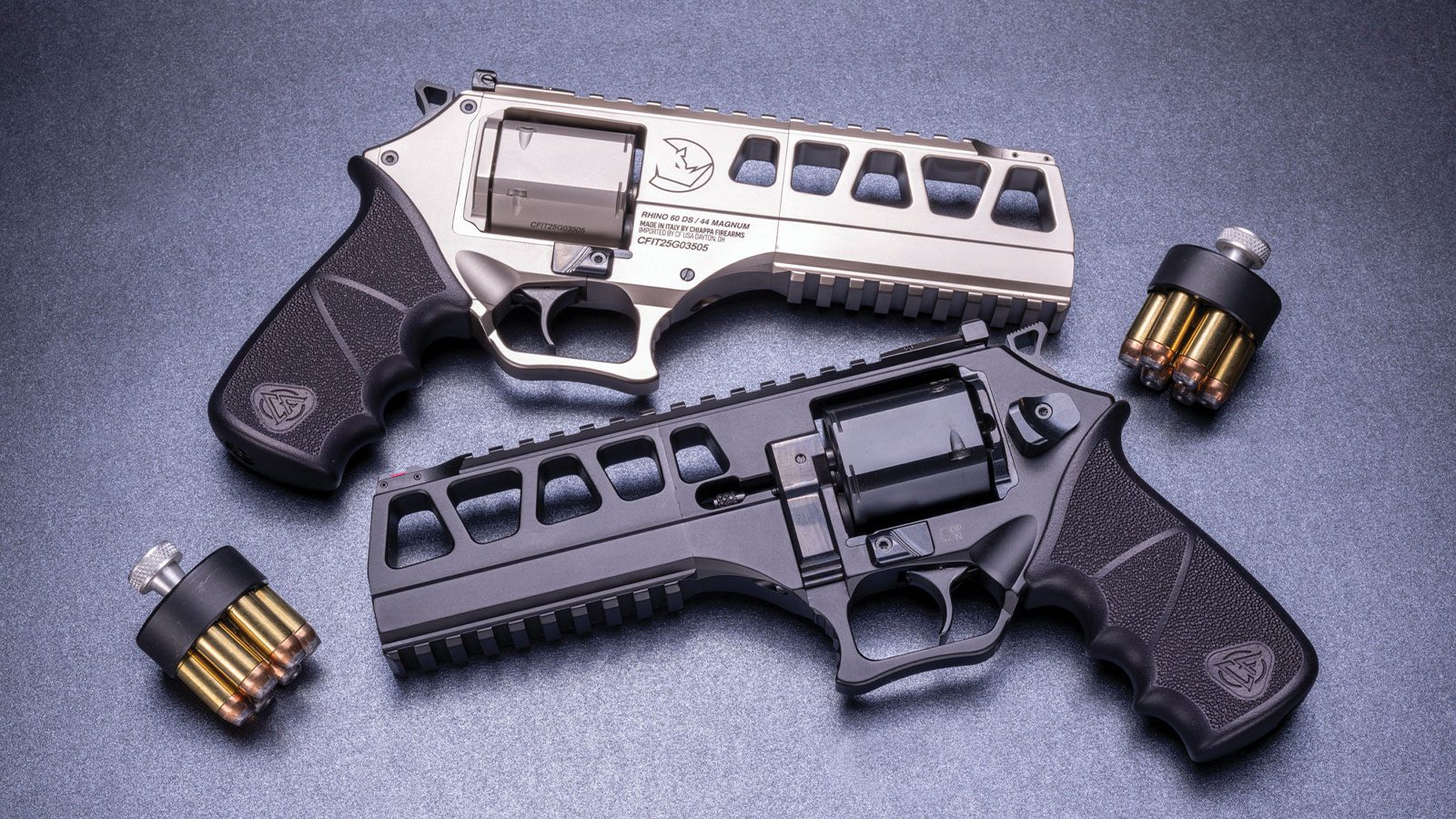
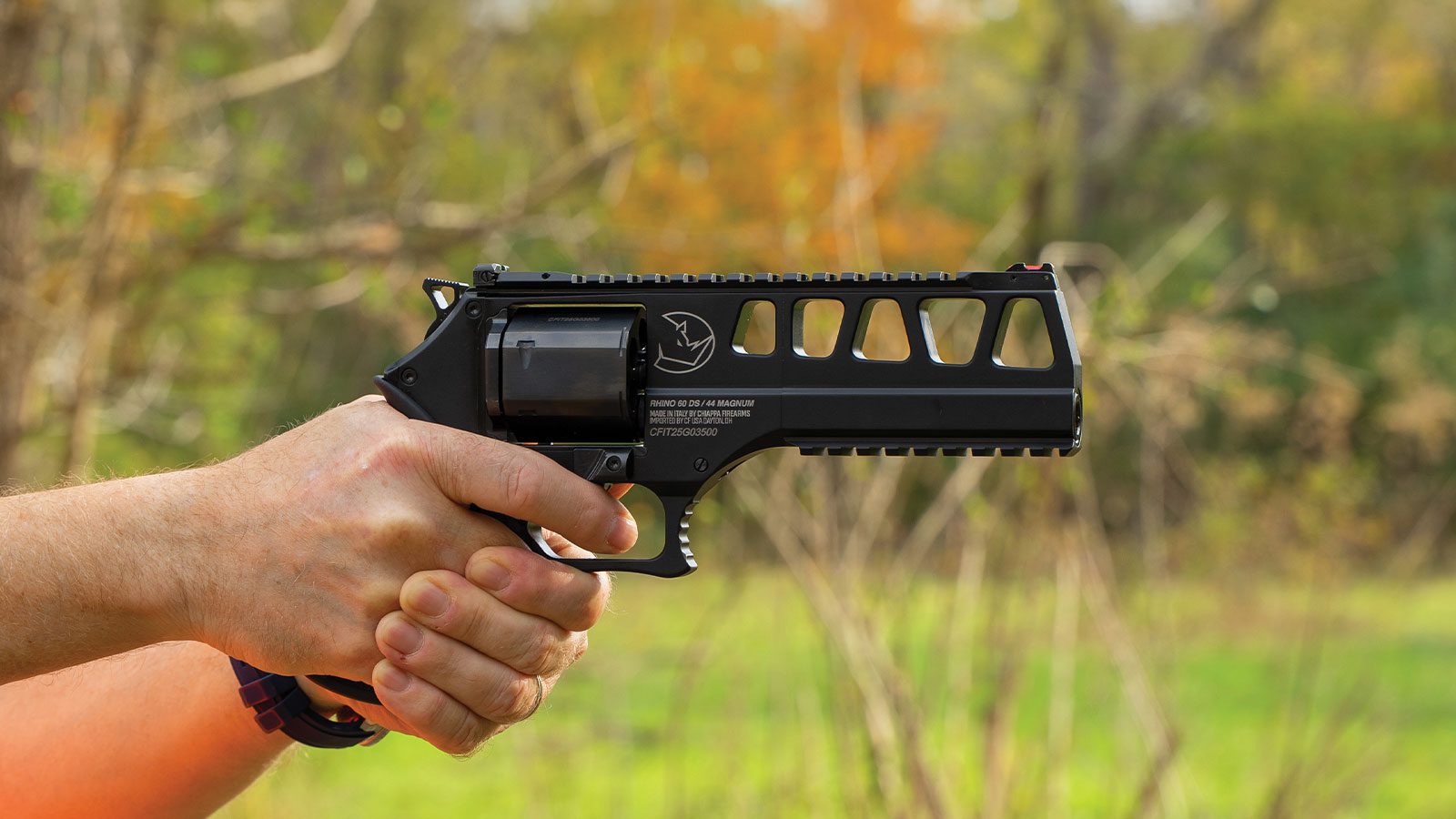
Chiappa transformed the landscape of large-frame revolvers with the Rhino by rethinking its capabilities and adjusting its shape and function. Instead of surface changes or added weight, the Rhino's key innovation involved relocating the bore to the lower part of the cylinder, effectively reducing the lever arm responsible for upward barrel movement and lowering the recoil into the hand, rather than above it. This intentional design decision enabled the better handling of powerful Magnum rounds in more compact and convenient revolver designs, significantly broadening the practical uses of wheel guns.
The visionary behind this novel concept, Emilio Ghisoni, applied a physics-oriented mindset to revolver engineering, aiming to utilize geometry to manage forces rather than relying solely on mass. The Rhino addressed torque and muzzle climb issues by positioning the barrel in the lower chamber, redirecting recoil forces to facilitate a straight-back recoil motion. This led to decreased barrel flip, quicker successive shots, and enhanced shooter accuracy.
Adopting this concept, Chiappa used modern manufacturing methods to craft the Rhino series. The revolvers integrated high-strength alloys and steel to maximize the effectiveness of each material. This careful combination resulted in a well-balanced weight distribution while ensuring durability in crucial components, such as locking surfaces and the cylinder assembly. Consequently, the Rhino could withstand high-pressure magnum rounds without the unwanted barrel rise that had previously limited the practicality of many users with large-frame revolvers. Initial feedback from skilled testers supported the theoretical foundations, confirming that the Rhino's lower bore placement effectively reduced muzzle rise, resulting in a smoother shooting rhythm, improved accuracy, and a decreased need to readjust the firearm between shots. This 'on the ground’ validation propelled the Rhino from a curiosity to a respected production platform with credibility in both tactical and sporting circles.
Gaining trust through its performance, the Rhino sparked further innovation and market release. Chiappa's strategy involved expanding the Rhino's look and caliber while broadening its offerings with various barrel lengths, finishes, and calibers, accommodating semi-automatic cartridges and modern defensive rounds. The recent introduction of 10mm Auto–30DS and 60 DS versions highlighted the platform's adaptability to high-pressure, high-performance roles without sacrificing its core benefit of controllability. This transition to 10mm showcases the Rhino's fundamental principle: altering the geometry shifts the revolver's capabilities, showcasing Chiappa's dedication to pushing boundaries and enhancing firearm functionality.
Practical implications were substantial in providing hunters, competitors, and defensive shooters with a large-bore revolver that delivered precision and ease of use. Self-defense, hunting accuracy, or compatibility with potent ammunition have reshaped the utility and effectiveness of revolvers. Despite differing viewpoints, particularly regarding its unconventional appearance and necessary ergonomic adjustments for grips and sights, the Rhino's technical advancements overshadowed aesthetic concerns, highlighting the crucial move from form to function.
Engineering the Rhino is not a solitary project but a catalyst for revolver innovation, and Chiappa has demonstrated the untapped potential within the platform. By reassessing fundamental parameters such as bore alignment, sight height, and mass distribution, Chiappa paved the way for practical improvements and initiated a shift in product development, prompting designers to reconsider long-standing compromises through the use of contemporary materials and manufacturing techniques. The enduring impact of the Rhino lies in its transformative influence on subsequent revolver designs, challenging traditional constraints and facilitating the evolution of revolvers into roles typically filled by semi-automatic firearms. This paradigm shift is not fleeting but signifies a fundamental reconfiguration within the industry.
Chiappa's ongoing dedication to expanding the Rhino platform, as evidenced by continuous model releases and forays into larger calibers like the 10mm, showcases their commitment to refining ergonomic elements and exploring diverse chambering options, all while preserving the mechanical advantage that set the original Rhino apart.
The Rhino's legacy embodies a practical approach centered on mechanical innovation that expanded the revolver's functionality, surpassing sentimental attachments to redefine the possibilities inherent in revolver design. Chiappa's continued work with the Rhino establishes a foundation for future innovations, setting a precedent for reimagining wheel guns based on controllability and heralding an upcoming chapter characterized by increased diversification, enhanced performance, and daring engineering choices. Expect an even more impactful and expansive narrative in the next phase of this ‘revolutionary’ evolution.