The Man Behind Moultrie
Dan Moultrie has a knack for always being at the forefront of the hunting industry—and he says the best is yet to come.
By Brad Fitzpatrick
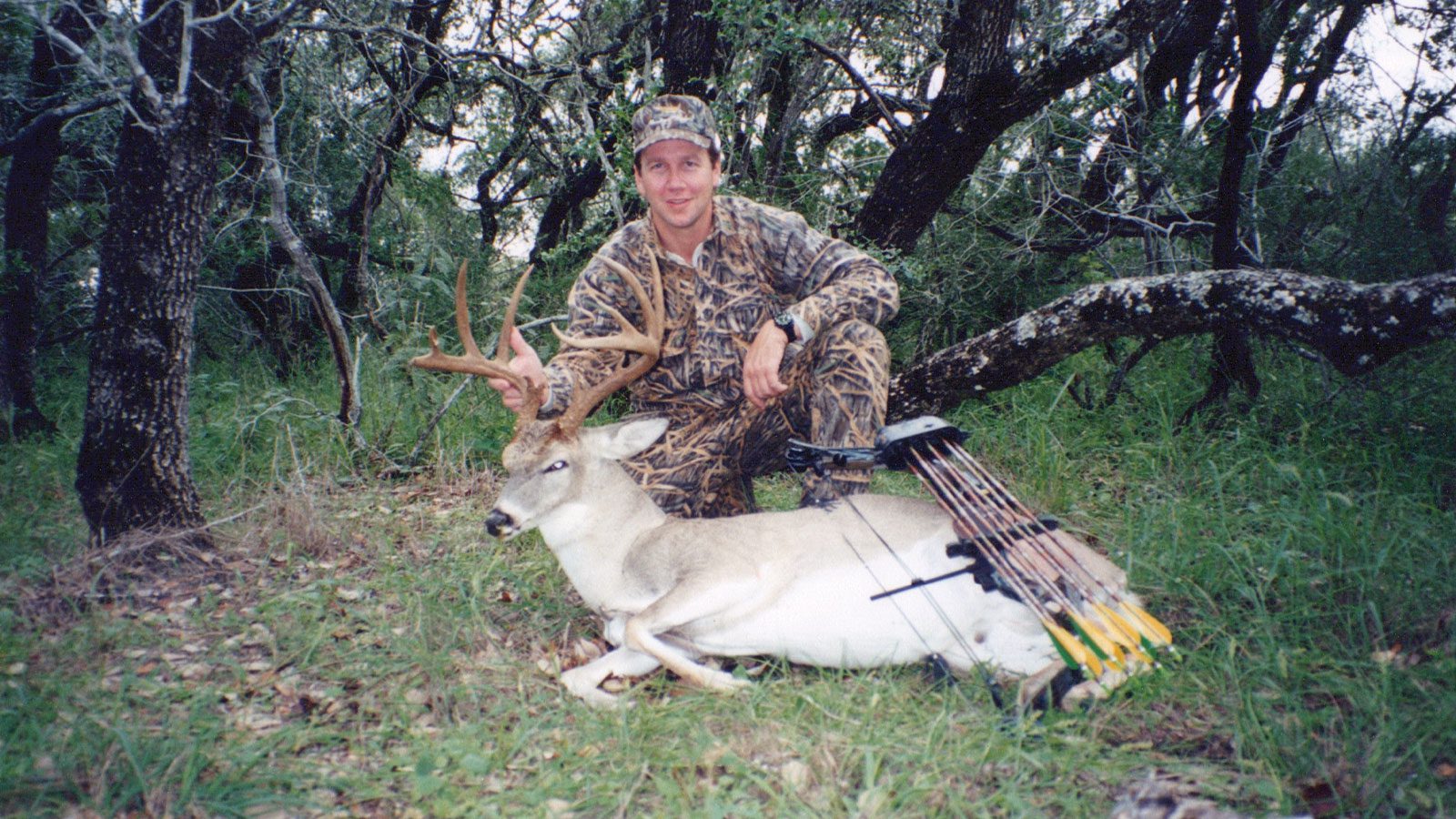
In 1979 Dan Moultrie was wrapping up a business degree at Auburn University, but he wasn’t certain exactly what he wanted to do with the rest of his life. Moultrie was certain, though, that he loved to hunt (he spent much of his time between classes out in the field), and he wanted to find a way to combine his business background with his passion for hunting.
One product concept Dan had was for an automatic wildlife feeder. He discussed his feeder concept with his brother Ferrell. Ferrell, who worked in software security for a firm in Atlanta, sketched the idea for an automatic feeder on a napkin. Dan believed they had a winning idea and wanted to begin manufacturing immediately, but his brother tried to keep him grounded.
“He said we would buy enough materials to make 10 feeders,” Moultrie told me. “When we did, they all sold right away. So, we bought materials to make 10 more, then 100.”
Dan Moultrie’s automatic wildlife feeders appeared at just the right time. In the 1980s managing private property for big game—particularly whitetail deer—was still in its infancy, but by the end of the decade views about deer hunting had changed dramatically. Attitudes toward wildlife management were changing, too, and Dan Moultrie was at the center of the revolution.
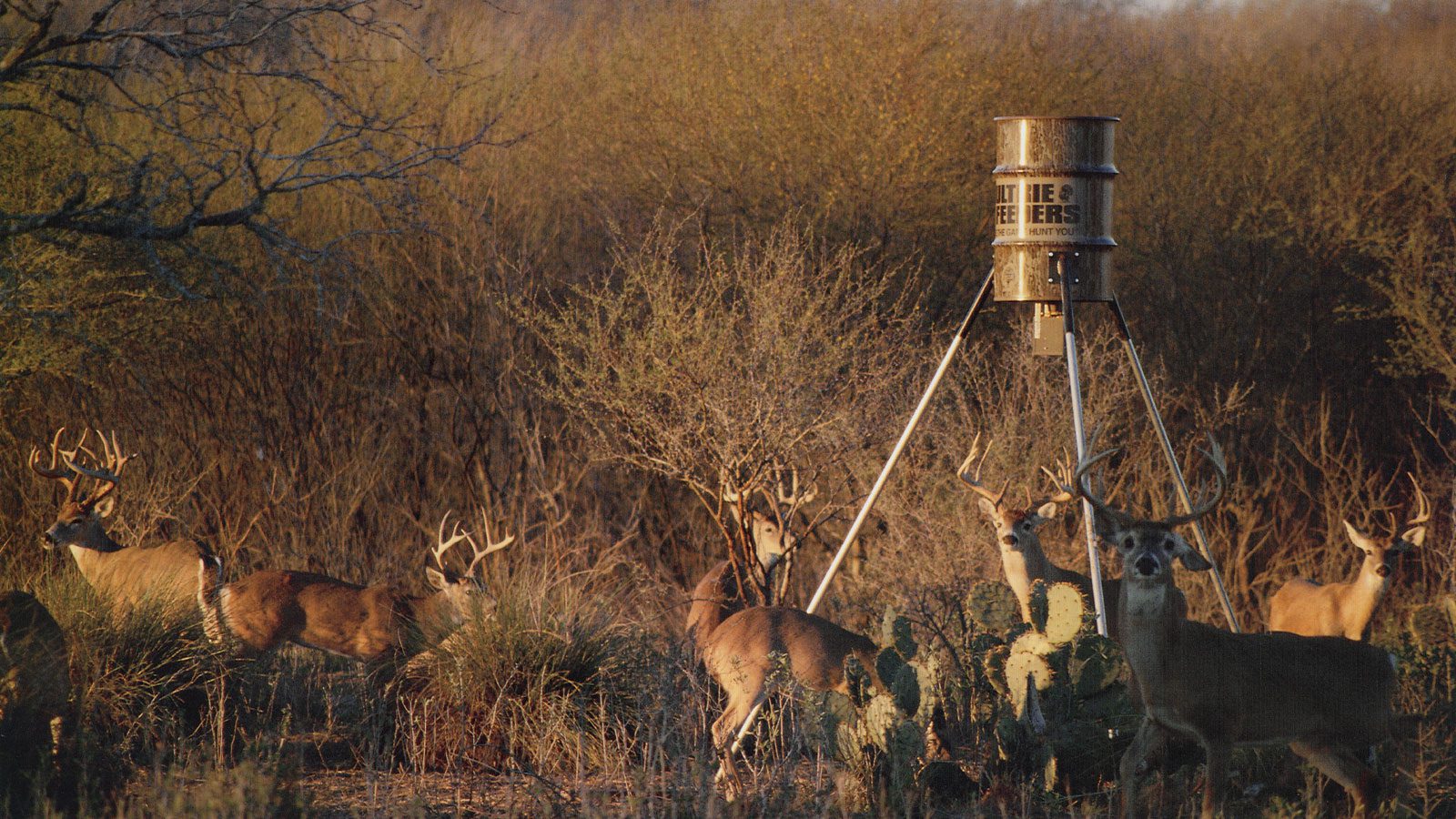
Moultrie’s automatic feeders changed deer hunting in two important ways. First, they were an efficient way to attract and maintain wildlife on your property. Second, they allowed landowners to provide regular feed sources for game.
The concept of private game management—specifically whitetail management—resulted in more hunters passing on young deer. States began implementing regulations that promoted improved whitetail trophy potential such as antler size restrictions and reduced harvest limits. Soon whitetail deer became far and away the most popular game animal in North America, and whitetail hunting went from a week-long rendezvous in deer camp to a year-round management process.
Capturing the Moment
Dan Moultrie had accomplished his goal of creating a business built around his favorite pastime, and his feeder business was phenomenally successful. (It remains so today; Moultrie still leads the automatic game feeder market almost 50 years later). However, his next innovation would impact even more hunters and would forever change how we view wildlife.
“I was hunting bear in Canada in the 1980s, and everyone wanted a color phase bear,” Moultrie says. “At the time, most outfitters used a dull tuna hook near the bait. If the bear passed the hook and lost some hair, you might be able to determine what color it was.”
Needless to say, this was not the most effective or efficient method to determine what type of bear was visiting the bait. Soon after, “trail timers” became popular with hunters. The concept was quite simple: when a bear (or deer or other animal) passed near the stand a tripwire recorded the time on a watch. Trail timers, however, provided hunters with little more information than the dull tuna hook arrangement. Sure, you could determine when something tripped the wire, but you had no idea how big the bear was that tripped the wire (or if it was a bear at all). Although visible tracks might provide some intel regarding the size of the bear that passed, they didn’t tell hunters anything about the bear’s color.
“I decided to try using a camera,” Moultrie says. “I started with a Victor rat trap with broken-down springs to press the shutter button. We used a film camera with a shutter button on top. The trap was activated when the animal tripped a string stretched across the trail.”
That rudimentary camera took just one picture on 35mm film. What’s more, the film had to be developed.
“We had to drive a long way and pay extra to get those photos developed in an hour,” Moultrie says. His early trail camera prototype is far less sophisticated than modern trail cameras, but it isn’t difficult to imagine his excitement when he saw the first images from his primitive trail camera setup.
Moultrie believed trail cameras would be best-sellers, but there were a number of challenges. First, most hunters weren’t inclined to drive long distances and pay money to develop a single photo that may, or may not, be an image of the target animal (or even the target species).
“Someone told me no man’s wife will ever let him leave a $300 camera in the woods,” Moultrie says.
Moultrie knew the trail camera concept had potential, and he also knew what—or who—he needed to make his vision a reality. For his trail camera concept to ever succeed he would have to find engineers who were willing and able to accept the challenge of creating a functional, affordable, and efficient trail camera.
The team of engineers that Moultrie assembled managed to pull of the design, creating infrared trail cameras that took multiple photos. These cameras were weatherproof and could withstand harsh conditions. And—most important—they were cost effective.
“We sold our trail cameras at major retailers for $199,” Moultrie says. He sold a lot of them. In fact, you can make an argument that Moultrie’s trail cameras are almost certainly the most influential tool for modern whitetail deer management, and now millions of hunters use Moultrie cameras to monitor the quality and health of game on their property.
Trail cameras didn’t just impact the hunting community, though. Modern biologists around the world use Moultrie trail cameras to monitor wildlife populations. “Camera traps” are used in many scientific studies, there they help state wildlife agencies determine game populations and densities—key factors in establishing hunting seasons and bag limits.
The Digital Age and Beyond
“The move to digital trail cameras was challenging,” Moultrie says. Digital cameras offered many advantages over film cameras. Specifically, digital cameras captured far more images than film cameras, and they did not require processing to view the images. However, digital cameras posed several challenges.
“Digital cameras whine when they are turned on,” Moultrie says. That whining sound alerted and oftentimes scared animals. The original solution was to leave the camera on all day and night, but this obviously drained the battery.
“We hooked those early digital cameras to car batteries and still drained the power,” Moultrie says. But over time his team developed technology that allowed them to obtain quality digital photos without draining the battery.
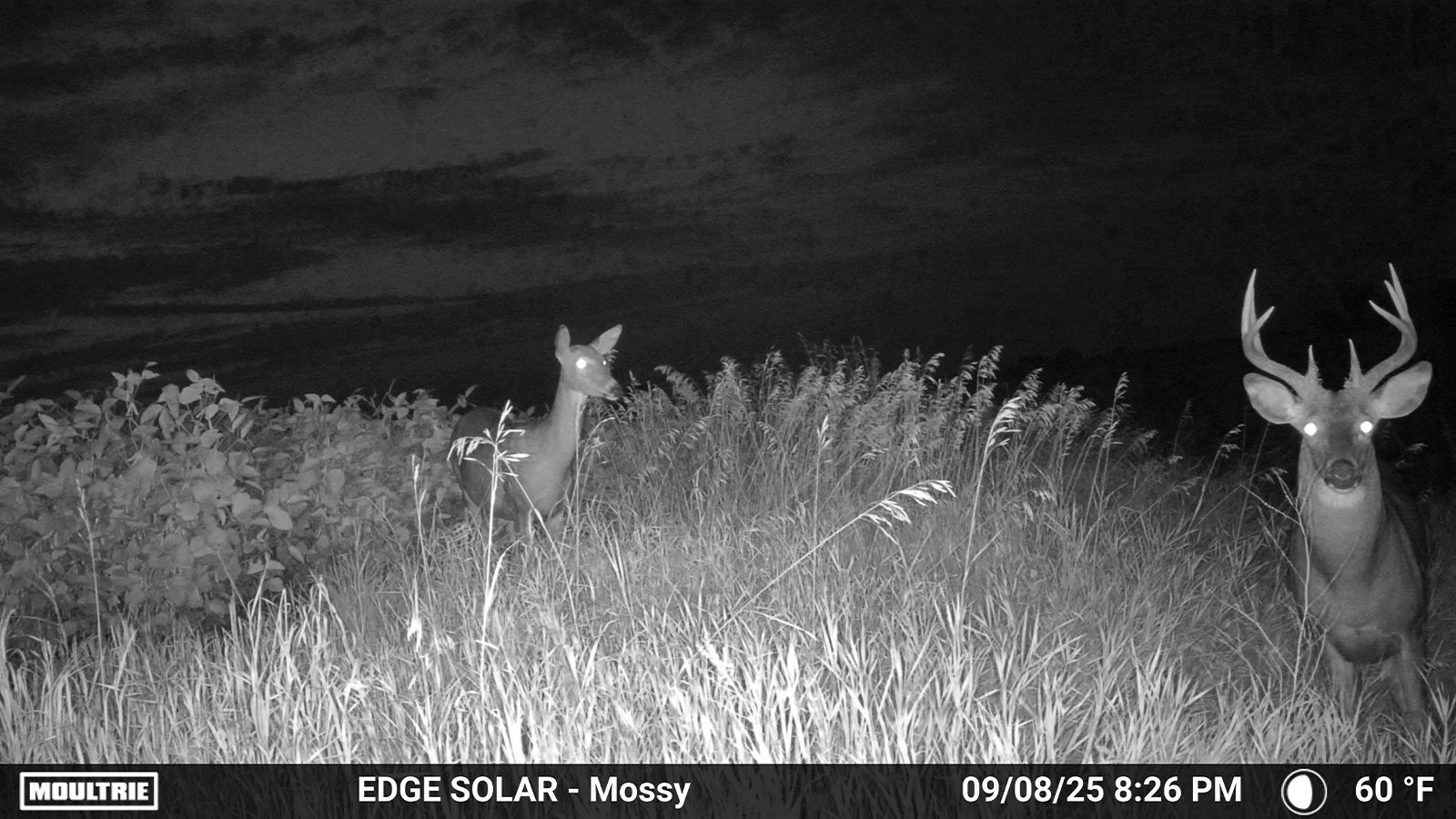
The next step in the evolution of Moultrie batteries was cellular camera technology. Cell cams not only capture high-quality digital images in the field, but also export those photos to remote devices using cellular networks or Bluetooth technology. What’s more, this connectivity not only allowed land managers to receive photos, but also provided a way to program camera settings from miles away.
“The app is the secret,” Dan says. Using the Moultrie app allows hunters not only to receive images but also to adjust camera functions. What’s more, the app provides key data regarding the best times to hunt and serves as an invaluable tool that improves the odds of success.
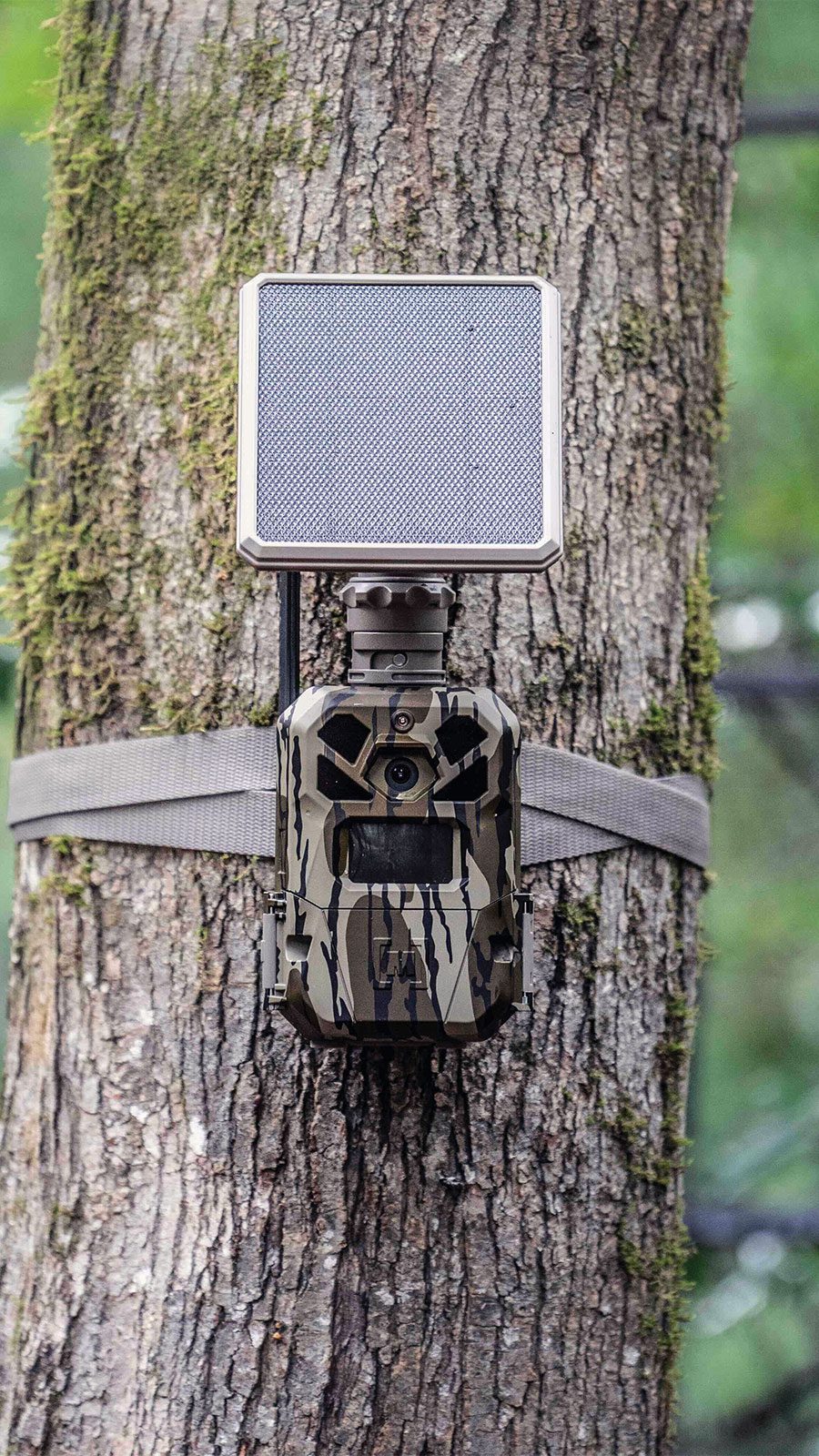
“It’s been incredible to see how far the camera technology has come,” Moultrie says. We’ve even addressed the problem of changing batteries by using solar energy.”
In 2003 Moultrie and the Moultrie Mobile brands were sold to PRADCO, a subsidiary of EBSCO industries that also owns Summit Treestands, Knight & Hale, and other brands. Moultrie says that his partnership with PRADCO has been outstanding and feels like the company has helped accelerate Moultrie brands to the top position in the industry.
How Moultrie Stays On Top
Given the advancements to trail camera technology over the last several years I asked Dan if there could possibly be anything left to bring to market.
“Oh my,” he told me. “You wouldn’t believe it. You’ll be amazed to see what we have coming in the next few years.”
These continued advancements are beneficial for hunters, but they’re also good for wildlife. Property and lease holders are taking steps to improve the numbers and quality of wildlife, and many of them use Moultrie products to accomplish this. There’s also a new nationwide push toward quality deer management that Dan Moultrie has helped spur forward. During his term in office Governor Bob Riley appointed Dan Moultrie as chairman of the State of Alabama Department of Conservation and Natural Resources Advisory Board. It was Moultrie who suggested cutting the bag limit on bucks from one per day to two antlered deer per season.
“Until we made the changes each person could kill 117 bucks per year in Alabama,” Moultrie says. Not surprisingly, the majority (over 80 percent) of bucks killed were only one-and-one-half years old or younger, and that prevented deer in Alabama from reaching their full potential.
“I proposed two bucks, but Governor Riley said, ‘you have to at least give me three bucks per year.’ So, we did.” The changes Moultrie suggested went into effect during the 2007-2008 Alabama deer season, and they seem to be paying dividends. In 2021 Alabama hunter Michael Perry killed the new state-record non-typical whitetail with a muzzleloader, and Shane Bailey shot the new Alabama state-record typical muzzleloader buck the same season. Recently, B.J. Davis killed a 199 4/8-inch buck during Alabama’s archery season.
Moultrie’s passion for hunting has also provided him with a very thorough understanding of who his customers are and what they want. After several high-profile cases of major national marketing campaigns gone horribly wrong in recent years it’s easy to see why Moultrie’s foundation as a hunter is so important to the continued success of his business. He’s a hunter first, and he knows what hunters want.
Moultrie also takes great pride in his brand. He backs his products with warranties and service guarantees, something that he was told would never work early in his career. Dan Moultrie and PRADCO want his customers to be satisfied, but also want employees to enjoy coming to work each day.
“I tell everyone who works for Moultrie to take ownership of the company,” Dan says. “That way everyone is invested in the finished product and everyone can take pride in what they’ve accomplished.”
For almost 50 years Moultrie has led the way outdoors, and according to Dan the brand has never had a down year. That’s amazing, especially when you consider the financial ups and downs that have occurred in this country and around the world over the span of the last two decades. Dan Moultrie and PRADCO’s desire to build the best outdoor products has allowed him to achieve his dream of working at a job he loved, and for that he’s grateful.
“I’ve never worked a day in my life,” Moultrie says. “I was fired up for work every day.”
So long as Dan Moultrie is still walking through the doors at his namesake company, you can be assured that Moultrie will continue providing products that helps hunters succeed in the field.