

Unquestioned Force
Six Women Who Changed the Firearms Industry
By Carolee Anita Boyles

Today, women are an unquestioned force in the firearms industry. They hold corporate positions, excel as competitive shooters, and manage companies without pushback. A generation ago, this was not the case. As recently as the mid-1990s, a representative of a major corporation was heard to say that no woman would ever attend their annual new products seminar.
Clearly times have changed. But for this generation of women to rise to their potential in the industry, the women before them had to break the glass ceiling. These six women are part of the cohort that pushed forward and would not take “no” for an answer.
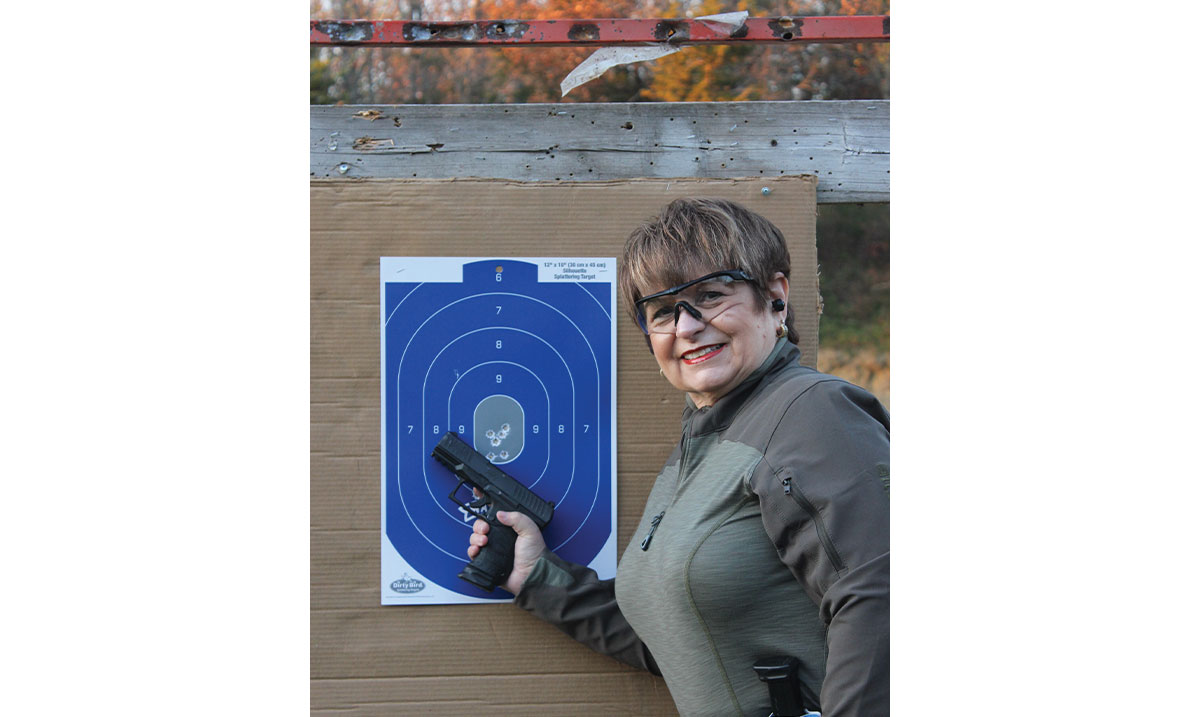
Becky Bowen
Becky Bowan defines Renaissance woman in the firearms industry. Hired straight out of high school by Turner Kirkland at Dixie Gun Works in Union City, Tennessee, Bowen worked first as a substitute accountant. She moved to writing and publishing the company catalog as well as its Antique Arms Catalog, developing and printing photos in a darkroom set up in the men’s restroom. Before long Kirkland was sending her and Sharon Cunningham to gun shows to buy and sell antique guns for the company.
Not content to work only for someone else, Bowan and a friend started a publishing company, Pioneer Press, which published books about muzzleloaders. She also created her own advertising agency, Quivera Advertising, to help smaller firearms companies with limited budgets advertise in big magazines.
Bowen moved to B. E. Hodgdon in Shawnee Mission, Kansas, a distributing company that was part of Hodgdon Powder Company, to produce its catalog. Her background in muzzleloading proved valuable when B. E. Hodgdon purchased Pyrodex, and when Hodgdon spun off B. E. Hodgdon to support Pyrodex, Bowen stayed with the parent company. Eventually, Hodgden created its own trucking line, Magnum Express, which Bowen managed while she continued doing promotions for Hodgden.
Still not content to work only for other people, Bowen partnered with Marty Fajen to form a safari company. For a number of years they took hunters on safari to South Africa, Zimbabwe, and Namibia.
After ten years with Hodgden, Bowen moved to Bushnell Optics in Overland Park, Kansas, where she worked for Barbara Mellman. Bushnell had just purchased Holosight, and the company was developing the Holosight Shooting Team, which Bowen managed for several years. She says this was the best job she ever had.
Following her stint at Bushnell, Bowen went to American Arms. When the company changed owners Bowen went to work as a rep, very rare for a woman in the late 1980s. She continued repping for 13 years, successfully selling traditionally “masculine” items such as ARs, tactical lines, and SOG knives.
Just as Bowen contemplated retiring as a rep Cyndi Flannigan, the new vice president of Walther Arms, tapped her to work for Walther as a major accounts manager. Instead of being a rep, she was now supervising reps. Three years later Bowen “retired” from office work to teach women self-protection classes at Not A Victim.

Doreen Williams Garrett
At 17 years old, most girls are flirting with boys and partying. In 1985, at age 17, Doreen Williams Garrett was building a new company, Otis Technology, an enterprise that changed the way the industry thinks about gun-cleaning equipment.
The previous hunting season, when she was 16, her grandfather trusted her to go deer hunting with his Winchester Model 94. While pursuing a buck into a swamp Garrett tripped on a root and tumbled into the mud, plugging the rifle barrel and ending her hunt for the day. Back in camp, she decided there had to be an efficient way for hunters to take cleaning supplies with them into the woods. The result was The Whole Kit and Caboodle, the first pocket-sized full cleaning kit.
For five years, the family assembled the kits on their dining table. In 1990, the company moved into a renovated horse barn in Boonville, New York. The following year they introduced the Tactical Cleaning System, and in 1992 introduced the Otis Elite Cleaning System. The company moved again in 1997 to its current location in Lyons Falls, New York, and has continued to grow.
Because some military buyers were skeptical of a young woman selling tactical kits, Garrett’s father, Jerry Williams, stepped in as the face of Otis on the tactical side for many years in order to help Garrett build that side of the business. Today, Otis is known more for its defense and tactical cleaning kits than for the original kit Garrett developed for hunters.
Once their military contracts were in place, the company built the facility they have today, complete with state-of-the-art infrastructure and vertical integration that controls supply chain and quality.
For many years, Garrett was the CEO and CFO of Otis. Her sister, Denise, was the vice president of sales and marketing, and her brother, Nick, was vice president of engineering. The other brother, Larry, was vice president of operations.
Around 2010, the company brought in a management team so the entire family could transition into an advisory role. Garrett became chairman of the board, a position she continues to occupy.
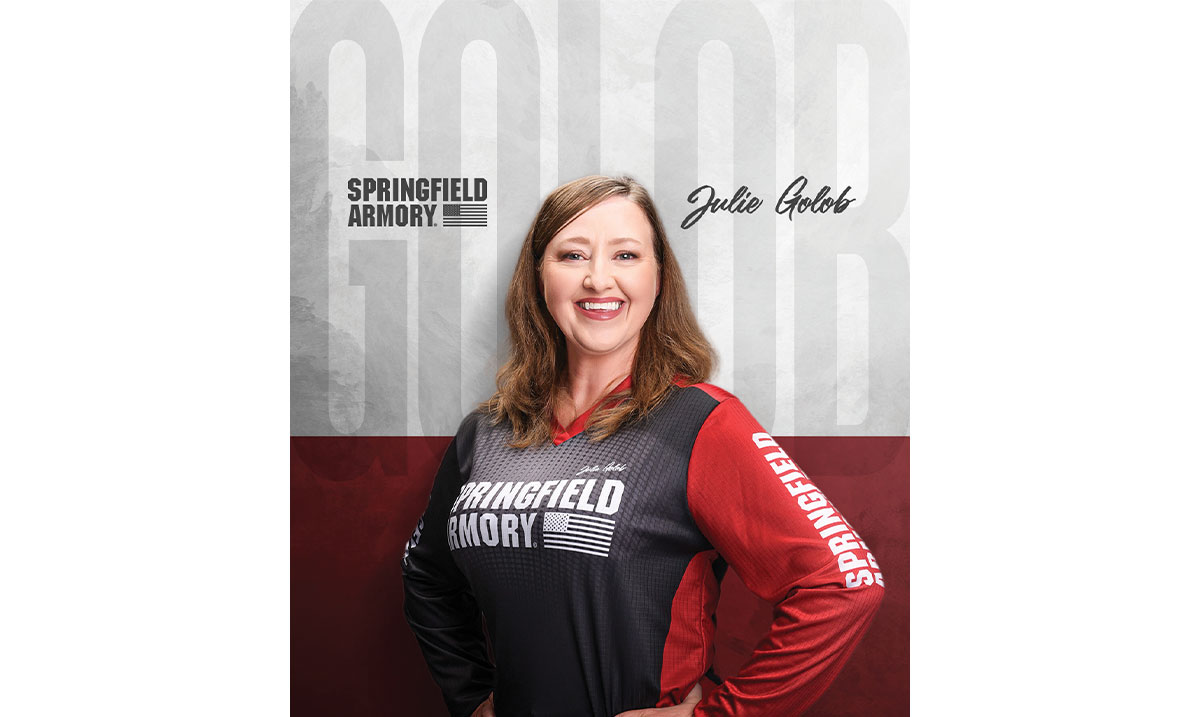
Julie Golob
Julie Golob thrives on competition. She has earned more than 175 championship shooting titles in seven different action-shooting disciplines, making her one of the top all-time professional shooters in the world.
Golob started shooting as a young girl. She would spend weekends on the range and in the field with her father, who helped her develop an appreciation for the outdoors and an understanding of the importance of being competent with firearms as life-saving tools. By the time she was 16, she had competed in her first national championship. This ultimately led to the U.S. Army Marksmanship Unit. Shooting for the Army’s Shooting Team gave her the opportunity to win her first national and world titles in action-shooting sports, which in turn opened the door to a career in the firearms industry.
Today, Golob represents Springfield Armory, Federal Ammunition, Trijicon, CCW Safe, and PHLster on the range and beyond. As a brand ambassador for these top-tier companies, she loves sharing guns, gear, and shooting sports with people from all walks of life. She said she’s had the opportunity to work with some of our industry’s most iconic brands, and she treasures the long-time relationships she has developed over the years. Like the people who enjoy shooting sports, she has said that this industry is unique in how even competitors are still united by the appreciation and desire for freedom.
Golob prioritizes welcoming, encouraging, and supporting women of all ages who want to learn to shoot and might possibly consider a career in the firearms industry. She finds sharing what she’s learned along the way very rewarding, whether that’s through a video that dives into detail on useful features, relaying an experience at a competition or convention or on social media, or as an author writing about firearm safety, shooting sports, or her newest project, concealed carry. She says she often stops to consider how fortunate she has been to share safe, responsible gun ownership with so many others.
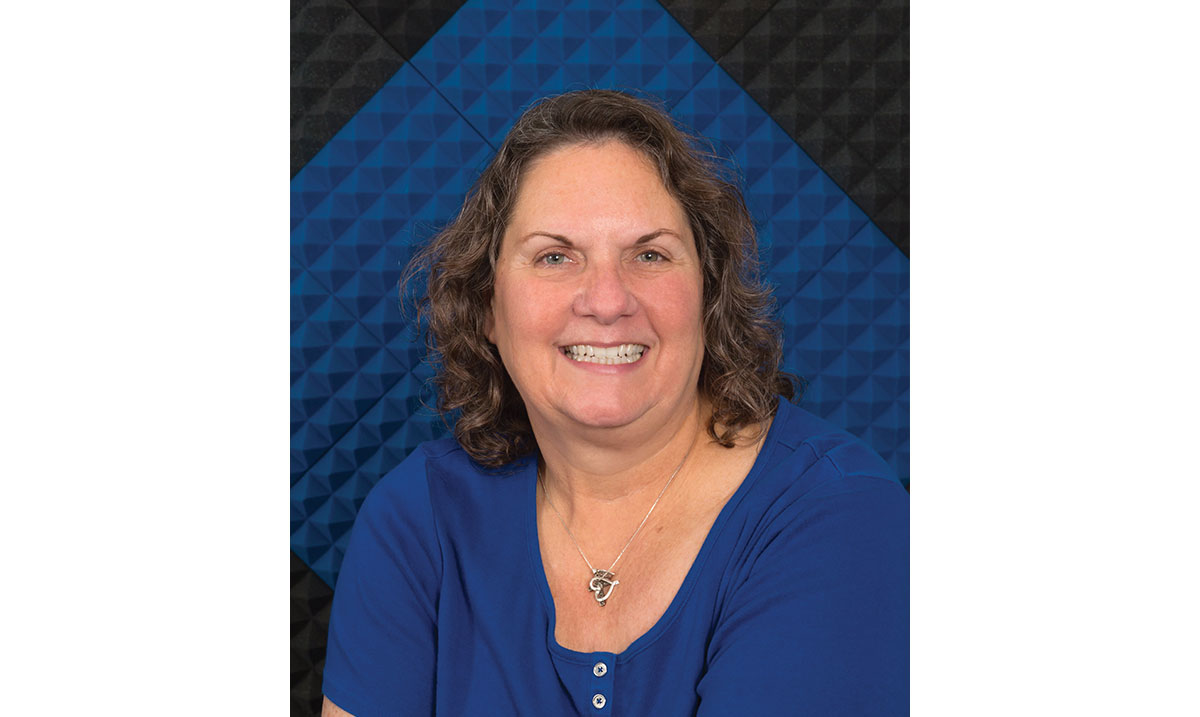
Jayne Hall
When Miles and Jayne Hall opened H&H Shooting Sports in Oklahoma City, Oklahoma, in 1981, Jayne Hall wasn’t even old enough to own a handgun. She was just 20 years old; Miles was barely 21. After an unpleasant experience at a home-grown and very primitive indoor shooting range, they decided they could design, and hopefully run, a better range than the ones they had been visiting. What they created together came to be known as the modern shooting sports complex. Although most people think H&H stands for “Hall and Hall,” it actually stands for “Hers and His,” because Jayne is the better shot.
From the beginning, Jayne was as deeply invested in the business as was her husband. For a time, she worked at municipal jobs in order to generate the income their growing family needed. Once the business was fully established, she was there every day, ultimately becoming the main buyer—one of the very first females in the industry to do that. She developed and mapped out purchases years ahead, eventually overseeing a $20 million-plus a year operation.
In addition to her business acumen, she had an uncanny ability to connect with her customers, to the point where she lovingly called them “guests.” This is an important distinction, as it made each transaction far more personal and meaningful for all concerned. Some regular guests asked for her when they came in and would not purchase a firearm from anyone else.
The same thing was true of major manufacturers and suppliers; when they came into the shop they wanted to see her, and only her. They sought her advice and asked her in-depth questions, accepting her challenges and productive directions. As a result, H&H became a top ten dealer and received most every honor the industry could give.
Several years ago, the Halls sold the business and went in with their son who had founded Hall-N-Hall Consulting. They now proudly work with retailers, distributors, manufacturers, and other leaders in the industry across the country to improve their businesses and, most importantly, work tirelessly to “Grow The Shooting Sports.”

Kim Rhode
Kim Rhode’s path to competition shooting began in the NRA Junior Program when she was only 10 years old. Almost as soon as she began competing in .22 rifle she found herself drawn to moving targets, so before long she switched to shotgun shooting. She quickly developed a passion for shotgunning, particularly American skeet, and by age 13, she had won a World Championship title and was named captain of the All-American Team. This accomplishment encouraged her to enter Olympic-style competition in International Double Trap and International Skeet.
By 1995, Rhode had joined the U.S. National Team. Since then, she has won 14 National Championship gold medals and earned 62 international medals in the Olympic Games, World Cups, World Cup Finals, World Championships, and Pan American Games. She is the first U.S. Olympian to win medals in six consecutive Olympic Games in an individual sport and is one of the most decorated athletes in Olympic history.
During her career, Rhode has competed in three Olympic shotgun disciplines: International Double Trap, International Skeet, and Bunker Trap. She is presently training for the Women’s Skeet event at the Los Angeles 2028 Olympic Games. Her goal is to win a medal in her seventh consecutive Olympic games.
Rhode serves as a vice president of the International Shooting Sport Federation (ISSF) and sits on the USA Shooting board of directors. She is a member of the executive board for the Kids & Clays Foundation, a shooting-based philanthropic organization that has raised millions of dollars to support families with critically ill children through Ronald McDonald House Charities.
In January 2026, Rhode received the NSSF Ken Sedlecky Lifetime Achievement Award, which recognizes individuals who have demonstrated a long-term commitment to the success of the shooting sports industry and have shown support of NSSF’s mission to promote, protect, and preserve hunting and the shooting sports.
Barbara Mellman Skinner
If any one woman can be credited with breaking the glass ceiling for women in the industry, it is the late Barbara Mellman Skinner. Skinner didn’t start out in our industry; one friend remembers that she was an aspiring pairs figure skater until her partner left her a short time before a big competition, which effectively ended her skating career.
After attending business school in southern California, Skinner worked for Fruehauf Trailers. Later she went to work for Bushnell when they were still located in Pasadena. When the company moved to Overland Park, Kansas, she initially complained about the move. But over time she came to love Kansas.
As public relations director at Bushnell, Skinner developed relationships with many outdoor writers and was supportive in helping writers do their jobs. She had a sharp wit and quick mind and was widely regarded as having an almost encyclopedic knowledge of optics; if a writer needed the answer to an obscure question, Skinner was the person to ask. If someone needed a riflescope the next day, she went to the warehouse, packed it, and mailed it herself, thus making sure the writer had it in time. She took care of “her” writers even if that meant annoying people who didn’t understand the nature of a productive manufacturer/writer relationship.
Skinner built a lengthy career at Bushnell and was a fixture at trade shows and press events, particularly at the SHOT Show. Through steady dedication and professionalism, she blazed a trail for younger women coming up in the industry. She is widely regarded as someone who connected people who needed to be connected, made introductions that launched careers, and served as a hub of encouragement and support.