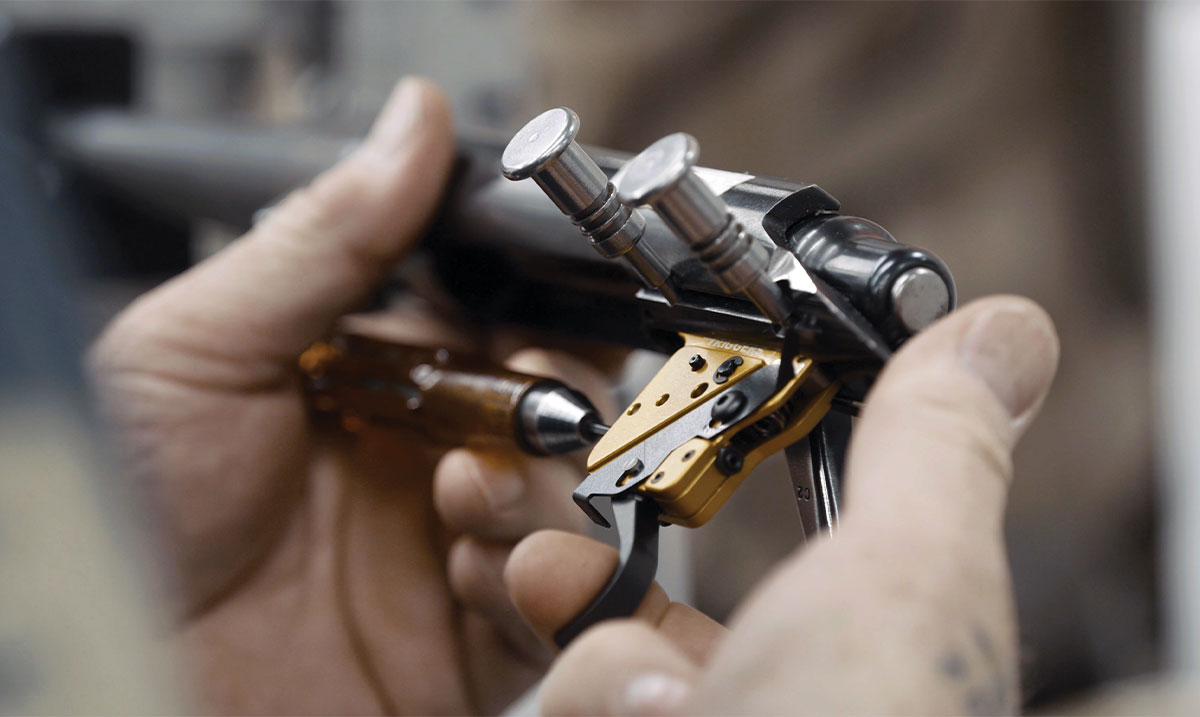
The Timney Touch
Timney’s generational promise: Their aftermarket trigger won’t make your firearm more accurate. It will make you more accurate with your firearm.
By Andrew McKean

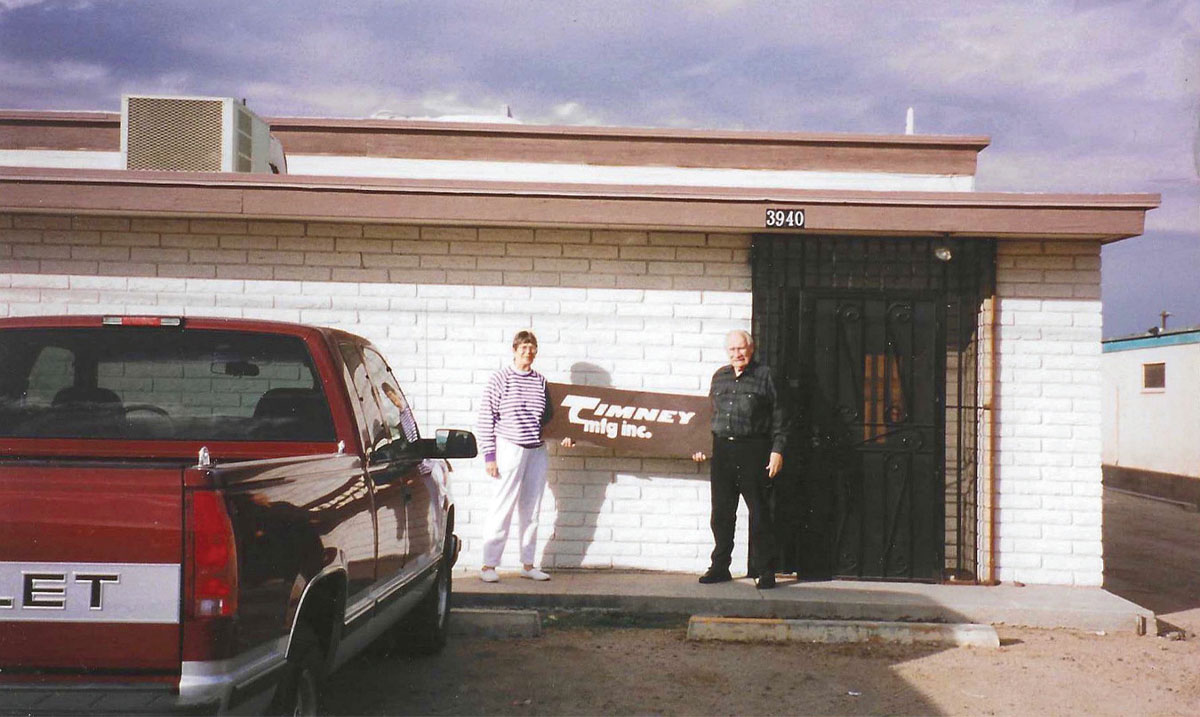
Paul Vehr had just ended his career as a technical writer and his wife Rosemary hers as a magazine editor, but because the last of their 10 children were still in the house, they needed a later-in-life income. So in 1981 the Vehrs committed their retirement funds to buy a trigger company in Phoenix, Arizona, that had just burned to the ground.
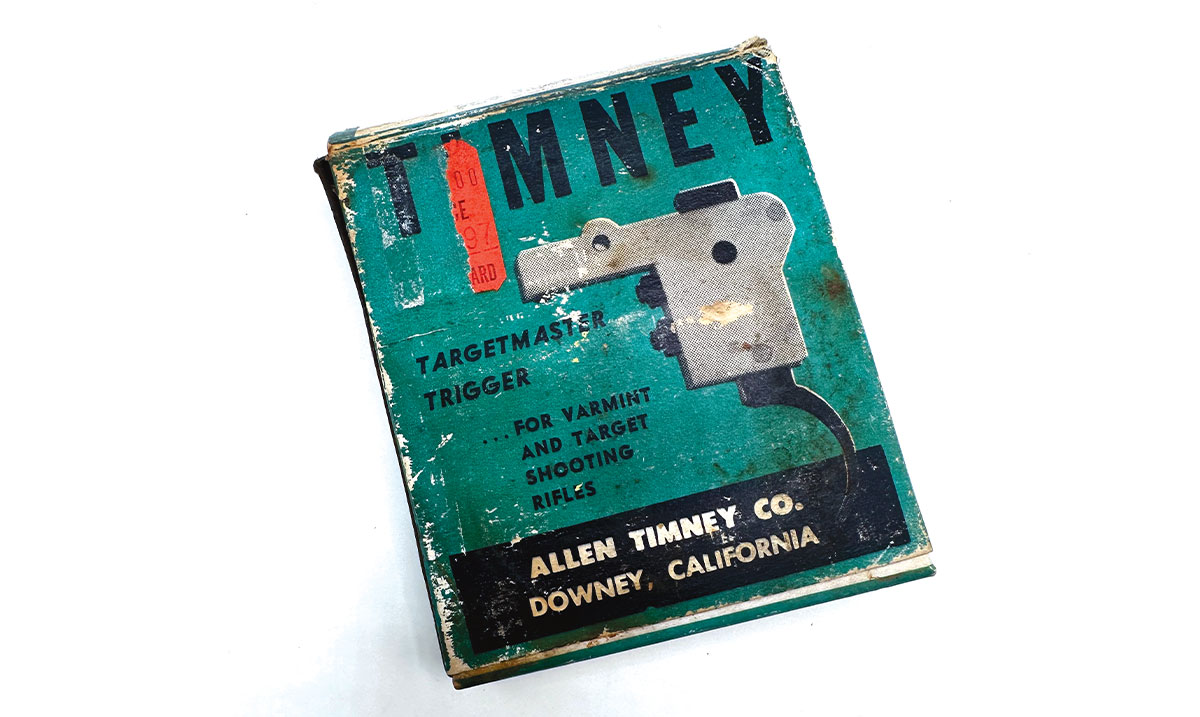
The company, Timney Triggers, had been founded in 1946 in California by Allen Timney, a World War II veteran who developed a simple, reliable, and safe aftermarket trigger mechanism that could be dropped into Army-surplus Springfield and Mauser rifles with common tools and kitchen-table know-how. With the addition of his adjustable trigger, Timney transformed those battlefield guns into deer rifles to serve the surging number of post-war hunters in America.
The company grew steadily for a decade serving mainly those surplus bolt rifles until the development of a replacement trigger for Winchester’s popular Model 70 multiplied sales in a single year. The introduction, in 1965, of a trigger for the equally popular Remington 700 made Timney a sought-after name in gun shops and deer camps and a darling of shade-tree gunsmiths around the world. By the time Allen Timney moved his business to Arizona, in 1975, it was making drop-in triggers for just about every major bolt-action rifle model and variation on the market.
The company’s reputation was well-established, but the fire had destroyed its fabrication building, most of its inventory, and all its trigger designs. The Vehrs bet that by investing in new manufacturing techniques, the company would rise from the ashes as an even larger and more consequential company.
By 2000, when Paul and Rosemary Vehr’s son, John, bought the business, Timney’s combination of manufacturing efficiencies and its reputation for responsive customer service made it the number-one aftermarket trigger in America, with a Timney for just about every rifle on store racks, including a few modern muzzleloaders. But the company’s product line hyperscaled with its high-profile introduction, in 2005, of triggers for AR platforms. Industry veterans, watching the slow acceptance of ARs by the hidebound traditional gun community, credit Timney with normalizing ARs from a “radical” design to a practical firearm platform.
Whether ARs appealed to an underserved generation of recreational shooters or created a new market of tactical gun-owners is debatable. What’s not is that Timney helped make the AR the best-selling modern firearm design on the market.
“It’s not just that Timney embraced the AR platform, it’s that John Vehr recognized the value of the platform as a legitimate firearm, one like so many others that could be improved with a Timney trigger,” says Chris Ellis, who started working with Vehr as a contractor two decades ago.
“This old trigger company helped validate the category,” adds Ellis, who now handles Timney’s public and media relations and works alongside John’s daughter, Talia Vehr, with branding and marketing. “That’s when Timney went from a bolt-gun trigger company to accelerating its design and manufacturing capabilities to keep up with the type of firearms our customers are buying.”
Entry into the AR market cemented Timney’s reputation as a modern manufacturer that could produce a trigger for just about any firearm, new or old, common or novel. A dozen years in its new location outside Phoenix, the company makes drop-in triggers for most popular shotguns, handguns, and even many lever-action rifles.
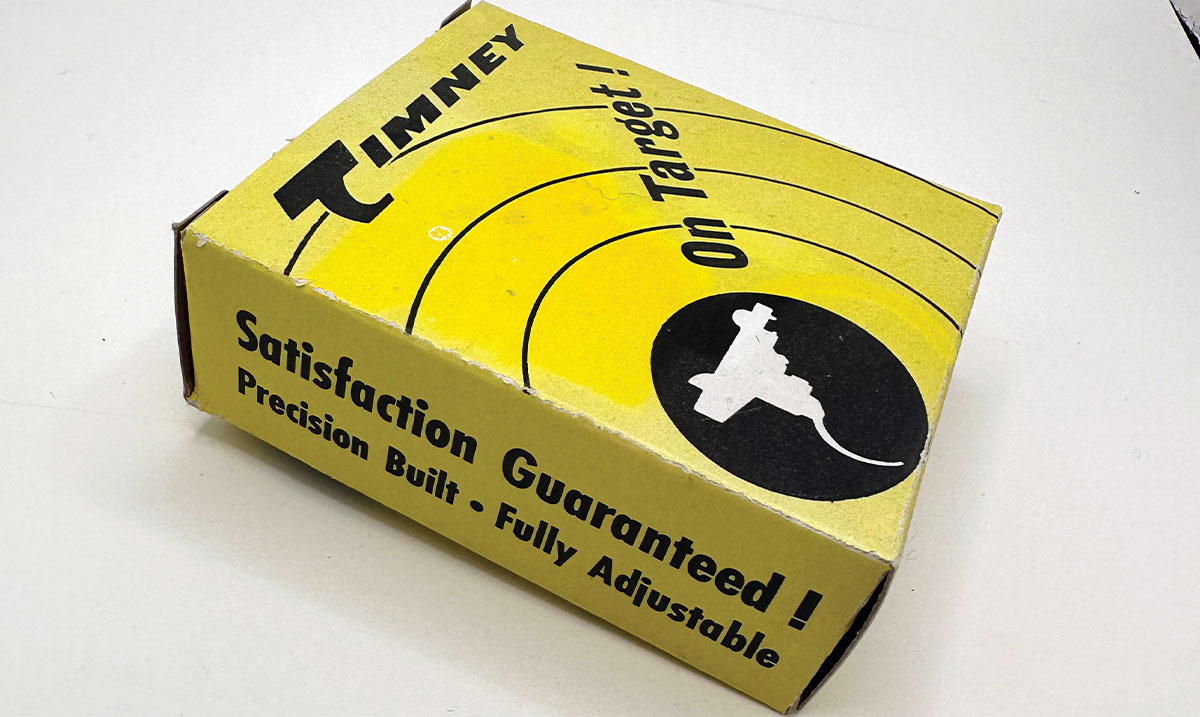
Timney has become the largest trigger company in the world, its distinctive mango-yellow packaging adorning racks at gun-accessory counters, the pegboards of gunsmiths, and the bottomless depths of the internet. If the company’s sustained growth can be credited to manufacturing consistency, it’s also because of its singular focus. Timney doesn’t make suppressors or scope mounts. It doesn’t intend to replace your gun’s stock or barrel.
“We make triggers. Just triggers,” says John Vehr, who stepped down in January to hand the company’s reins to John Trull, a longtime firearms executive.
“Why do we stay in our lane? Because it’s the only thing we do and we’ve gotten pretty good at it,” says Vehr. “We owe it to our 80 years of customers to bring out the latest and greatest triggers because they want and expect us to.”
Those customers are loyal but demanding of Timney because of the distinctive feel and break of a Timney trigger.
“Whether it’s in a pre-’64 Model 70 or in my Plain Jane Remington 870 pump, a Timney breaks the same,” says Montana hunter Ky Idler. “It’s snappy. It’s clean. It’s safe. It’s familiar.”
A Singular Lever
Vehr says the design challenge presented by the AR platform required engineers to think expansively. “One of the foundational principles of a Timney trigger is to make it as easy as possible to install with basic gunsmithing abilities. There are three pieces that make an AR trigger, and it’s not necessarily intuitive how it goes into the lower for the average person. So we decided to think outside the box, to keep the geometric tolerances of the platform, to work in guns from all manufacturers and models, but be easy to install, safe, and break like a Timney. We came out with that trigger at SHOT Show 2006 and blew people’s minds.”
The next mind-blower was an aftermarket trigger for the notoriously sloppy AK platform. “It probably took us seven to eight years to make a trigger that would go in every AK variant out there, and it turns out there are a few variants that it doesn’t fit in,” says Vehr. “But we got it pretty close to universal, and I’m proud of our team for sticking with it and finally getting it done, not because it was going to be a best-seller but because we rose to the design challenge.”
The reason a Timney Trigger feels like a Timney isn’t because of a numeric engineering standard or a poundage required to break the sear, says Vehr. It’s because blood-and-flesh people make the triggers that other blood-and-flesh people use.
“Every single trigger is tested in the action it was designed for by a human,” he says. “If you ever come to Timney and see our production floor, you’ll see every firearm action on the wall. A bunch of men and women take the action and install a pre-production trigger and test the trigger over and over again, tweaking as necessary. A great trigger has a distinctive feel, and to make sure a Timney feels like a Timney you have to know what a Timney feels like. We have some of the best men and women in the world because all they do is test triggers all day and they know a good trigger. And they really know Timney Triggers.”
Magic Sauce
“Everybody is chasing accuracy,” says Ellis. “Today is no different than it was in the 1940s, the 1980s, or the 2010s. When somebody says they’re not getting the most out of their gun, and then after they drop a Timney in it their groups shrink or they can stretch their effective distance a little on a mule deer hunt, the first thing they do is tell their buddies. Then their buddies tell their buddies. That’s the magic sauce for Timney. And we listen to those customers. The number-one question for our customer service department, today as it was 40 years ago, is ‘Can you make a trigger for my gun?’ So we do.”
Ellis says when he started peddling to the press the company’s value proposition he met resistance from gun writers, the very scribes who followed Whelen’s byline in popular magazines.
“The main thing I heard was, ‘Every gun comes with a trigger, so why would I want another?’ The next thing I heard was, ‘Your triggers aren’t cheap.’ And I’d respond, ‘Do you want to be more accurate?’ Of course, the answer to that is always yes.”
In early gun reviews, there was little mention of the trigger, or if there was, it was as an unfortunate exception to an otherwise noteworthy gun. Now, triggers are one of the first attributes mentioned in a review, and Timney has been joined by a half-dozen competitors all vying for a growing market share.
“In the early days, we really had to sell folks on an aftermarket trigger,” recalls Ellis. “Now, good triggers are in vogue. We don’t have to convince people to drop in a better-than-production trigger. They’re coming to us. I’m happy people want to talk about triggers and can recognize a good trigger, and I’m also happy that production triggers are better now than they were 20 years ago. Timney can take some credit for that.”
The Sweet Spot
As important as a clean-breaking, adjustable trigger is to accuracy, it must also deploy only when intended, and Timney has invested a good deal of its production and brand capital in making safe triggers.
“A trigger has to make a shooter more accurate, but it has to make a gun safe,” says Vehr. “The standard of the industry is the SAMMI drop test, which is that a trigger has to maintain its integrity if dropped from three feet onto a rubber pad. But we have adopted the NATO standard, which is to drop a gun-and-trigger mechanism on a concrete pad from five feet.
“It’s a lot tougher to make a precision trigger that feels really good and is safe at that higher standard,” says Vehr. “And to be honest, some of our designs just didn’t pass that test, so we didn’t manufacture them. We aren’t in the business of producing a trigger that you’ll be more accurate with but which you can’t shoot safely anywhere but a bench.”
“Safety is number one. Ease of installation is number two,” says Vehr. “If we can find that sweet spot where there are enough guns out there that we can produce triggers for it, and it’s safe and easy to install, we’ll build it. I know that sounds boring and formulaic, but in order to get to the size company we are, those have to be your priorities. People expect a lot from us, and they rightly should.”
Customer feedback is Timney’s North Star. Talia Vehr maintains a running record of all customer comments, and chief among them are the gun models that shooters want to accessorize with a Timney.
“If you want to know what firearms are selling, look at what triggers Miss Talia tells us to produce,” says Ellis.
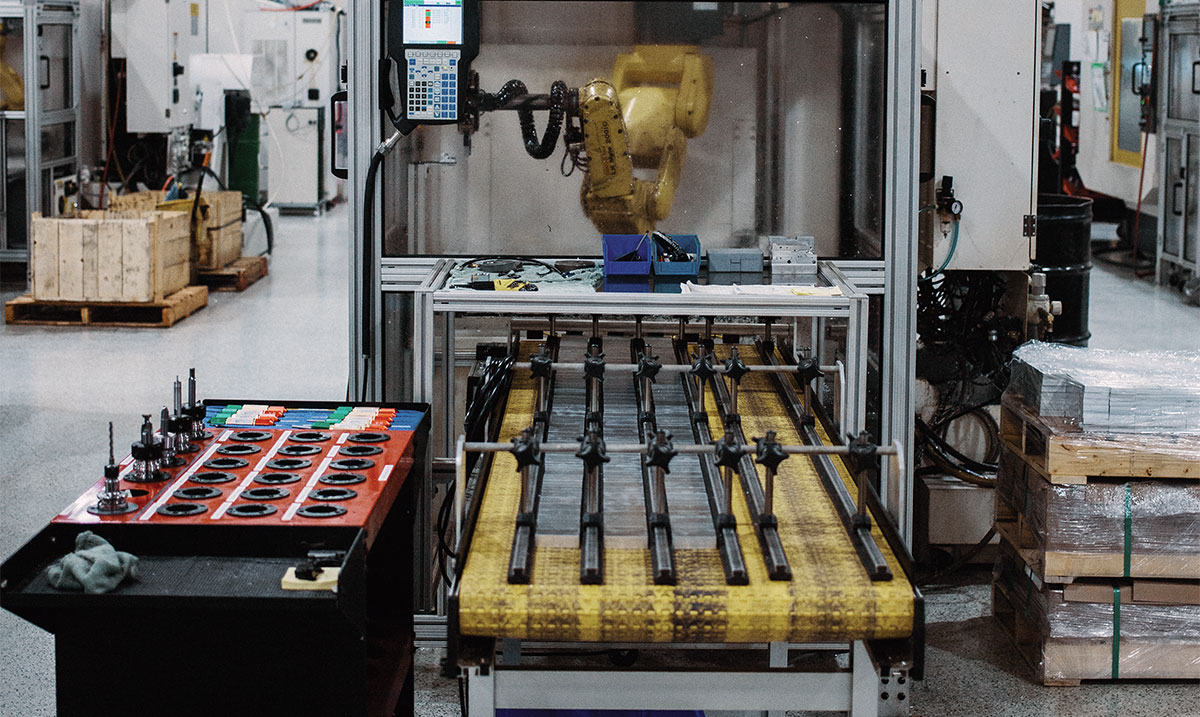
Talia Vehr says customer demand is only part of the reason she’s the third generation of her family to guide the company. Timney’s culture is the larger reason. “We have about 40 employees, and to be honest the machines do a lot of the heavy lifting, working around the clock,” she says. “But the people are the real resource. We do things collaboratively, making sure people are happy and engaged with their work and their coworkers and that there’s room to grow. If you start in customer service, that doesn’t mean that’s where you’ll stay.”
For her part, Talia didn’t intend to start, or stay, at Timney Triggers. “I started out as a copywriter, just as a temporary job right out of college,” she says. “But talking with my dad about where Timney was going, and helping achieve the potential of my grandfather’s company, and seeing that employees are valued, I slowly worked into other things. We’re a big company, but a small company.”
John Vehr adds that it’s a company that transcends generations of a gun’s owner. “There’s only one reason Timney exists, to make you are more accurate with your firearm,” he says. “A Timney trigger feels repeatable not only today and tomorrow but for the rest of its life, no matter who pulls it.”