

The Big, Beautiful Suppressor Market
The removal of the federal suppressor tax should kickstart sales into high gear.
By Brian McCombie

In July 2025, the suppressor market rejoiced when President Donald Trump signed into law the so-called Big Beautiful Bill (BBB) because one section of this federal budget legislation removed the $200 tax on suppressors. With the tax reduced to zero (starting on January 1, 2026), shooting sports industry professionals expect huge sales to follow, though some also have concerns.
“We anticipate a 200- to 300-percent increase in sustainable demand for suppressors once this [tax change] goes live,” said Brandon Maddox of Banish, the flagship suppressor line of Maddox’s company, Silencer Central.
“We expect to see a larger, sustained uptick, not just a promotional bump,” added Scott Clinger, president of SilencerCo. “This [tax removal] will broaden the market significantly and likely will bring in customers who previously never considered owning a suppressor.”
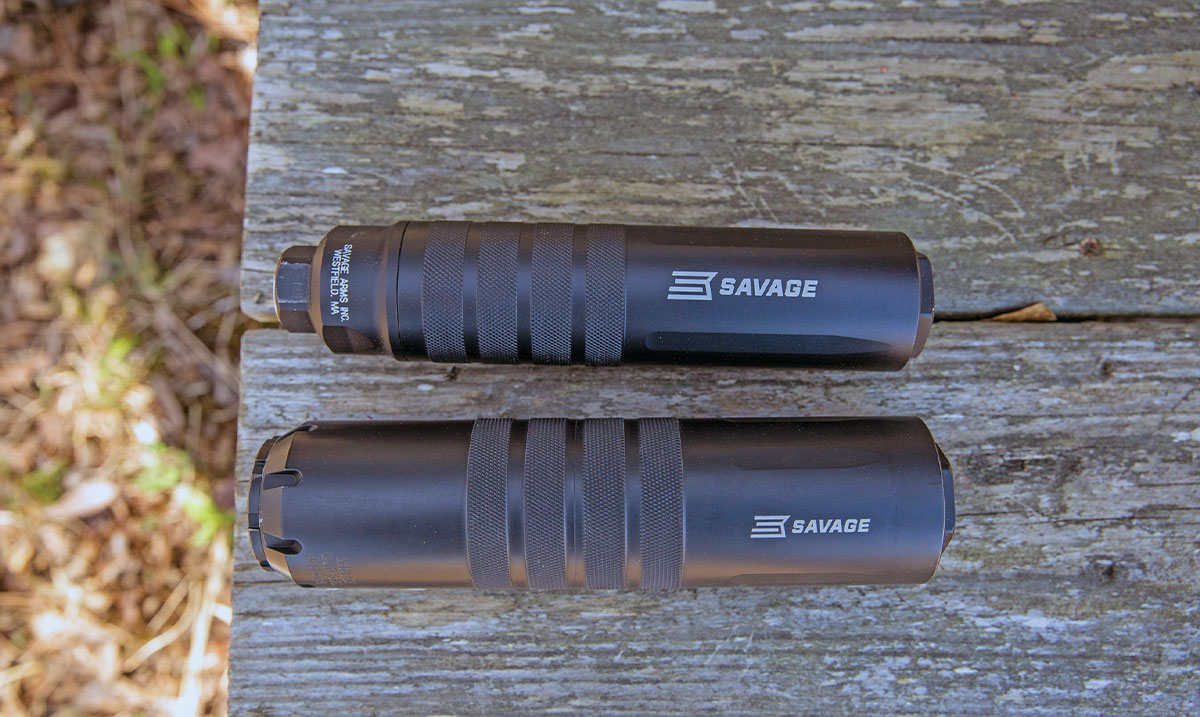
Savage Arms entered the suppressor market in 2024 with the AccuCan line of suppressors. Robert Gates, senior vice president of Savage Arms and Bowtech Archery Brands, also predicts a surge of dealer orders for Savage suppressors. So much so that initially he had reservations about whether ATF could keep pace with dealer and consumer demand.
“Based on concerns from our customer base, I had reservations that the flood of new applications would crash the system,” he said. “That came true to some extent, but the ATF did their part and things have gone much smoother than I envisioned.”
Now, three months into the big wave of suppressor sales, Gates said, ”Our sales are definitely up over last year, and the new AC30 BOB continues to be our top seller. As a small player in the suppressor market and only building hunting suppressors, I am sure other manufacturers have seen that the new rules have had a larger impact on their business.”
His main concern now is the market is seeing a flood of competitors, and prices are dropping quickly. “I see the U.S. market mimicking the European suppressor market in the next 18 months. In many European countries, suppressors are treated as simple accessories; they are widely available, they are relatively inexpensive, margins are thin for the manufacturer and seller, and brand prestige is minimal. Supply outweighs demand and prices continue to drop. Once regulation loosens and manufacturing standardizes, suppressors will stop being ‘specialized’ and start being industrial.’”
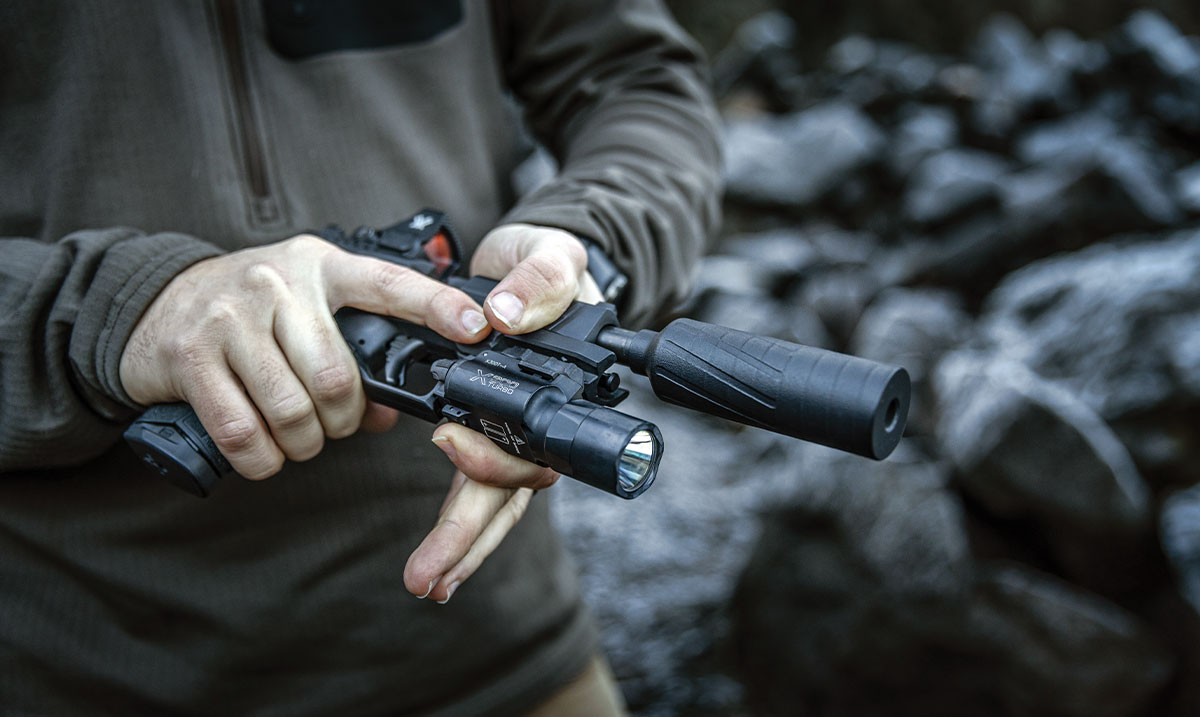

Waterfowlers are also getting into the act. The BANISH 12 is a titanium shotgun suppressor that works seamlessly with interchangeable choke tubes.
Gone Mainstream
“Suppressors have finally hit the mainstream gun consumer,” Ernie Beckwith, president and CEO of Dead Air Silencers, told SHOT Business. “Consumers now range from not only the tactical crowd but also have found their way into the hunting market and general firearm recreational users.” And those hunters and recreational shooters may well require a different sales approach than that familiar with the tactical crowd.
“Over the last decade, we've seen a dramatic shift in consumer expectations,” said SilencerCo’s Clinger. “Today's customers expect an educational sales experience. Retailers who take time to explain benefits, showcase suppressors alongside hosts [firearms], and can sell the experience of shooting suppressed are winning.”
Clinger added that in the past, many suppressor buyers were looking for units with multi-caliber versatility in a single suppressor. However, today’s buyer is more likely to want a suppressor made to run on a specific type of firearm or for a certain caliber.
Over the last decade, Banish’s Maddox has seen the income levels of suppressor buyers broaden, too. “The consumer landscape [for suppressors] has shifted from being primarily composed of affluent individuals—often empty nesters with significant disposable income—to a more diverse and mainstream demographic,” he said. “This change has also seen an increase in participation from the hunting community, which was once dominated by varmint hunters. Now, it includes a broader range of enthusiasts, particularly those interested in big-game hunting.”
The Tech Factor
Suppressor technology keeps improving and refining, largely driven by the demands of suppressor buyers. “The trend in the market is clear,” Maddox said. “Customers want products that are shorter, quieter, and lighter.”
One way suppressor makers fulfill these demands is through the use of 3D printing technologies.
“Dead Air has adopted additive manufacturing/3D printing processes that allow the use of designs that were unachievable with standard, subtractive CNC and welding processes,” Beckwith said. “Dead Air’s Sandman X, Lazarus 6, Mojave 9, and Mojave 45 suppressors all include variants of our Triskelion gas-management technology that would be non-machinable without utilizing 3D printing technology.” That tech, he noted, allows Dead Air to produce stronger and straighter suppressors that are quieter than ever.
The Dead Air Lazarus 6 (top), Mojave 9 (middle) and Sandman (bottom).
AB Suppressors, of New Century, Kansas, produces several centerfire and rimfire suppressor lines, including their flagship Raptor rifle suppressors. AB has used its original foundation in building high-tech turbines to approach suppressor manufacturing with a very open mindset.
“We’ve been quick to adopt advanced technological opportunities to aid in our production,” said Ethan Buckley, AB’s national sales manager. “Most recently, we’ve been focusing on robotics and using robotics to aid in production and manufacturing.
For Banish, the Banish 9K titanium suppressor has become that line’s top seller. Made specifically for 9mm caliber pistols, the 9K’s popularity stems in large part from Banish’s innovative 3D printing that allows for more baffles built into a very compact design—and at a reasonable price.
Suppressor materials have also improved. “A decade ago, stainless steel and Inconel suppressors were the main focus,” Buckley noted. “When compared to today's standards, the suppressors were heavy with much thicker walls. While you can still find these suppressors on the market, titanium and lighter-weight cans have really become the choice for consumers looking for a quality suppressor.”
At SilencerCo, the Omega series, for instance, introduced industry-leading strength-to-weight ratios using materials such as titanium and Cobalt 6. The dominant metal used in the Banish line, including the new Banish 12 shotgun suppressor, is titanium. Likewise, Dead Air’s Mojave 45, the next evolution of Dead Air’s 45 AUTO silencer lineup, is a titanium suppressor featuring the above-mentioned Triskelion gas-management technology.
No way around it, though: titanium is a pricey metal and suppressors made from it will almost always carry a heftier price tag than their steel and Inconel cousins. The prepared retailer will offer a selection of suppressor types to capture sales all along the SRP spread.
What might all these changes mean for FFLs? First, said Beckwith, FFLs need to consider applying for an SOT (Special Occupational Tax) so they can offer suppressors. SOT, of course, refers to the Special Tax Registration and Return-National Firearms Act (ATF Form 5630.7), which FFLs must possess before they can sell NFA-listed items like suppressors.
“It amazes me how many firearm retailers still do not have a SOT,” Beckwith said. “The name of the game in firearms retail is diversification of revenue streams. For the first time, an NFA item can be a relatively high-volume, high-margin sales item now that the wait times are minimal and the tax stamp has been removed.”
But he stressed that the license to sell suppressors is only the beginning. “I would suggest that retailers ensure that their sales staff become educated in suppressor features, advantages, and benefits,” Beckwith added. “In the old days, retailers had one employee that was the ‘NFA guy.’ Now, every sales associate should be knowledgeable of both product and process to take advantage of the boom in suppressor interest.”
SilencerCo Omega 300 is a lightweight, full-auto-rated .30 caliber suppressor.
Peter Sol is the senior content marketing manager for Silencer Shop, creators of the Silencer Shop Kiosk. He agreed that the need for knowledgeable sales staff was paramount.
“Today’s buyers are way more informed,” he said. “They’re reading reviews, watching YouTubes, and they expect a seamless buying journey. Focus on education and demystifying the NFA process. Highlight real-world benefits: hearing protection, better shooting experience, hunting advantages, and family safety.”
Suppressor consumers receive most of that information digitally, Sol added. Which is why, he argued, that retailers themselves need to incorporate digital marketing as part of their business strategy for all products, including suppressors.
“It matters more than ever—email, social, and search,” Sol said. “If your establishment isn’t moving forward with digital marketing, you will be left behind.”
Don’t wait for customers to bring up suppressors, either, Maddox advised. “Dealers should proactively present the option of silencers to every customer who enters the store, rather than merely waiting for inquiries from those who specifically ask about them,” he said. “This approach is crucial because it normalizes the conversation around silencers, making them less intimidating for those who may be unfamiliar with the process.”
SilencerCo’s Clinger agreed. “It’s also crucial to market suppressors not as accessories, but as essential firearm components,” he said.
One way to show the essential nature of suppressors, Clinger said, is for the FFL/SOT to host suppressor demonstration events. Getting ready for such events is also a great opportunity to have sales staff brush up on suppressor advantages and uses, as well as on the NFA paperwork still needed to purchase suppressors.
The FFL/SOT also has another advantage: the ability to offer firearm and suppressor packages. “Now that the tax on suppressors has been voided, I anticipate a full lineup of Savage rifle packages that come with a riflescope, a Savage bi-pod, and a Savage suppressor,” said Beth Shimanski, Savage’s vice president of marketing. “It will be a one-stop-shop type deal.”
Such packages could be very attractive to a range of buyers, including the deer hunter who’d like to hit the woods with a Savage Axis rifle outfitted with a scope and a suppressor. Or the parent buying a rimfire rifle, scope, and suppressor package for their first-time youth small-game hunter.
The repeal of the $200 tax creates so many new and repeat suppressor sales opportunities for the FFL ready to take advantage of this changing and booming market.
Along with digital marketing incentives, dealers should look into ways to speed the approval process. That’s where the Silencer Shop Kiosk comes into play. Introduced in 2016, the Kiosk has transformed the suppressor buying experience. “Instead of going from government office to office, customers can quickly and easily submit their fingerprints and complete their profiles right on the Kiosk,” said Sol. “All the information was (and is) saved digitally, so once a customer used the Kiosk and was approved, they could get more suppressors in the future without the need to submit new fingerprints every time.
Today, there are 2,000 Kiosks distributed at SOTs across the nation, with more Kiosks added monthly. “We’re always upgrading the system for speed and reliability,” Sol said. “Recently, we upgraded to the vertical displays that allowed for a better and smoother customer experience. Our goal from day one has been to eliminate every roadblock between a customer and their suppressor.”
The author was an early adopter of suppressors and has used them extensively on many different Hunts. Here, he's using a Banish 46-V2.
Growing Demand
The suppressor market is crowded, and it’s about to get a lot more crowded. Mike Slack, founder of suppressor manufacturer Engaged Industries, says that the companies that will thrive will be the ones on the cutting edge of evolving new technology. To that end, Engaged Industries is committed to real and sustained innovation.
Slack’s other main focus is the Engaged Industries network of dealers. “They are our boots on the ground, providing the insight into what the customer is looking for,” he says. “We take their feedback seriously as we continue to look for innovation opportunities. We also emphasize our pricing structure specifically for the dealer.”
It was with his dealers in mind that Slack created the “Suppressor Engineer” on the YouTube and Rumble channels.
“Suppressor Engineer aims to address all the common questions a dealer will get from customers, and it also aims to give the consumer high-level knowledge about suppressors so they can make more informed purchase decisions,” Slack said.
“The biggest trend and change that is going to happen over the next few years is demand driven,” Buckley said. “Suppressor manufacturers are forecasting extended backlogs. The dealers that aren't willing to work with distributors and/or manufacturers are going to receive what’s left after allocations—and what’s left might not be what you or your consumers want. Reach out to your distributor rep and your manufacturers. Talk to them, forecast with them. They are here to help all of us and by planning ahead, there’s a lot of money to be made over the next coming years.”
EOTECH DCBL Suppressor (left) and Silent Steel USA Steamer Series (Right)
Sidebar: Two New Entrants into the Suppressor Market
Late last year, EOTech announced its new line of suppressors, the DCBL series. Manufactured from Grade 5 titanium, the DCBL suppressors are 3D printed and feature a unique flow-through design. That design is EOTech’s proprietary Breathable Technology. It allows DCBL suppressors to actively stabilize internal pressure while reducing blowback and minimizing back pressure. The result is smoother cycling, reduced carbon buildup, and enhanced shooter control.
Its monolithic, corrosion-resistant construction is built to withstand harsh operational environments, including salt air, extreme temperatures, and prolonged courses of fire. A Cerakote finish in either matte black or tan provides added durability.
“Our goal with any product we launch is to improve the overall performance of the firearm,” said John Bailey, EOTech’s vice president of marketing. “We have done that for years with our holographic weapon sights and most recently with Vudu riflescopes and the OGL laser system.”
DCBL suppressors are available in three calibers—5.56, 7.62, and 9mm PCC. The 5.56/7.62 cans come equipped with a hub and KFM flash-hider while the 9mm PCC directly threads onto pistol-caliber carbines. The patterned, exterior design provides increased surface area for heat dissipation as well as traction for attachment and removal.
Silent Steel USA launched recently with the introduction of the Streamer Series of suppressors: the Streamer, Compact Streamer, and Micro Streamer. These new suppressors utilize Silent Steel USA’s patented gas-rotation system, replacing traditional baffles with advanced Flow-IQ technology. This design minimizes back pressure, improves cooling, and provides longer suppressor life and more consistent performance across shooting platforms.
The Micro Stream is a small but extremely functional suppressor perfect for SBRs and PDWs; the Compact Stream is a more compact version of the full-sized Streamer. All three suppressors utilize the Silent Steel USA turbine + filter baffle-less system that redirects and cools gases in a swirling path, delivering a consistent low tone, minimal blowback, reduced first-round pop, and superb heat mitigation.