

The Heat is On
Thermal optics is a growing category, and iRayUSA is leading the way.
By Robert Sadowski

iRayUSA has an image to maintain. That’s a fact both literally and figuratively. The market for thermal optics is hot (come on, you knew that pun was coming), and iRayUSA has a unique competitive advantage with brands that offer innovative design, quality, performance, and value—along with an unmatched warranty.
The best way to explain the thermal optics industry is to compare its trajectory to that of GPS. At one time, a GPS unit was large and needed to be carried in a backpack; then smaller and more affordable versions that attached to the dash came on board. Now GPS can be found in our smartphones and watches. As the technology becomes more compact and more widespread (and easier to use) the cost shrinks proportionally. And that spurs even more innovation.
So, just Who is iRayUSA? iRayUSA is an American-owned company based in Texas. It is the U.S. distributor of the Nocpix brand of thermal optics (nocpixusa.com). iRayUSA works closely with Nocpix to develop the thermal optics it distributes and is responsible for many new technological advancements in the industry, including 1280x1024 resolution sensors; 12um, 10um; dual field-of-view optics; shutterless calibration technology; and more.
The Nocpix Advantage
In simple terms, thermal optics use sensors that detect infrared radiation (heat) emitted by an object. That radiation is then converted into electrical signals that, in turn, are converted into images.
What’s important for dealers and consumers to know is that Nocpix owns the sensor technology it uses in its products. Manufacturing sensors is complicated and expensive, and it is rare that a thermal-optic brand has the ability to manufacture its own sensors. Most thermal optics brands purchase a sensor from one company, other parts from other companies, and then assemble a finished product. Not Nocpix.
By producing their own sensors, Nocpix can offer a more competitive product at a better price. It also can introduce new features faster than its competition. In other words, Nocpix drives product innovation while other brands watch and play catch up.
“This allows us to optimize everything in the optic,” says Angelo Brewer, iRayUSA’s director of operations. “It also means we provide a more competitive product at a better price and innovate faster.”
The ability to quickly innovate is a key aspect of iRayUSA and Nocpix’s success. “A handful of years ago a thermal scope was easily $10,000,” Brewer says. “Now, you can purchase an amazing thermal scope like our Bolt series for under $2,000.”
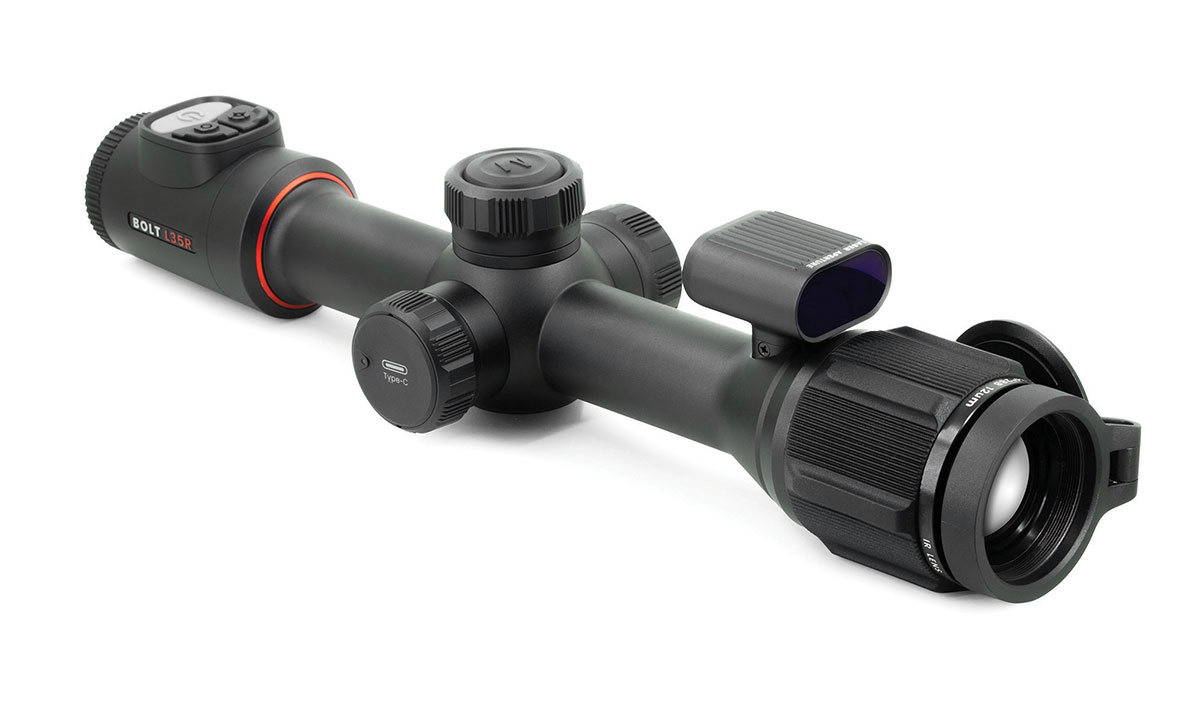
The Nocpix Bolt series features a 384x288 12 μm sensor with a 1024×768 AMOLED display that provides sharp, smooth visuals. It is also equipped with a built-in laser rangefinder, photo and video recording with audio, Wi-Fi connectivity, and multiple zeroing profiles. It is, without a doubt, a serious piece of equipment at a palatable cost.
“Traditionally, our brand was known for mid to high-end products, building on our brand’s image quality and performance,” says Brewer. “Now, we are growing the brand on value and offering feature-rich products at price points that don’t cause sticker shock.”
The Big Three
New customers face three barriers to entry into the thermal optics market. First is cost, but that barrier has been lowered somewhat.
The second barrier is complexity. Like any high-tech product, thermal optics can be daunting to some users. With a traditional day optic, the user flips up the lens covers. Assuming it is sighted in, it is now ready to use. A thermal optic needs to boot up before it can be used. And like early GPS units, the interface—in this case a plethora of control buttons—can be difficult at times to understand and use.
“Our products are designed to be easy to use, and that's important for someone getting into thermal,” Brewer says. “Nocpix is constantly refining the user interface, and they have an entire team that develops and tests user interfaces.”
Brewer was in Oklahoma recently on a multi-day field test of different functions on an upcoming product to ensure its ease of use. “We spend a lot of time and energy trying to make our products as intuitive as possible. We are constantly asking ourselves, ‘how would somebody expect to operate this?’”
A prime example of designing the optic for ease of use is the Nocpix Ace series. The Ace features a quick-access panel— basically three large, glove-friendly buttons on the top of the optic that are simple to use. One button powers the scope, another starts image or video recording, and the third performs rangefinder functions. There is no need to press a button multiple times to drill down into the menu. The Ace series simplifies the optic, because who wants to be fiddling with a menu in the dark while wearing gloves?
“Using our products is very intuitive,” says Brewer, “because there's a lot of thought and testing that goes into it.” That approach also extends to its user manuals. Nothing is more frustrating than trying to figure out a feature and having to plow through a manual the size of the Encyclopedia Britannica. iRayUSA writes all their manuals in house for the U.S. market. It might seem like a trivial detail, but it is a big deal for someone who does need to read the manual. It also means the manual avoids translation issues commonly found in manuals originally written in another language.
The third barrier is what you might call “the look.” The appearance of a traditional thermal optic can be off-putting to a new user. Instead of the familiar round ocular lens and windage and elevation turrets, you’re faced with a boxy unit that contains a tiny screen in which the target image is rendered in pixels.
But the Nocpix Ace and Bolt thermal units depart from that boxy profile by looking remarkably like a traditional riflescope with a 30mm tube body, turrets, eyepiece, and ocular lens that could grace a classic Model 70 bolt-action. But in this case, what would be the windage turret and parallax knob on a day scope is actually a compartment for a spare battery and USB port. The elevation turret accesses the menu functions. The magnification ring on both these series of thermal optics is similar to a traditional day scope except with a 3X zoom onto the digital display. At the front of the Ace and Bolt scopes you’ll find a manual focus.

