

Selling Hunting Ammunition
You can’t stock every load or know what every customer wants. But smart choices in both arenas boost profits.
By Wayne Van Zwoll

When I started hunting deer, Federal was a year into producing 18 loads for 12 rifle cartridges. Hornady explored ammo manufacture with Frontier loads on military brass in .30 Carbine, .308, and .30-06. Of 45 centerfire loads by Remington and Winchester, 10 dated to the 19th century.
Ammo options for hunters now number into the many hundreds. Those by Federal and Hornady alone total 555 (rimfire, match, and handgun ammo excluded). Add the rosters of Remington, Winchester, Nosler, Barnes, Weatherby, and Black Hills—and off-shore brands like Fiocchi and Norma—well, it’s an embarrassment of riches.
Whatever the sum when you read this, you won’t stock every hunting load, or even most of them. What you will sell depends on how accurately you predict what will sell. A shopper who leaves without a word because he or she doesn’t see a desired product is more than a sale missed. Where will that customer go for the next box?
The number of rifles bored for any cartridge, and how often they’re fired, affect ammo sales. The popularity and utility of the .308 and .30-06 argue for stocking several loads of each. The .375 H&H has a huge fan base, but few applications stateside. Stocking expensive ammo bites deep into your budget for affordable loads that sell readily.
In 1964 ammo prices floated in a narrow range ($3.75 for a box of .30-30s, a buck more for .30-06s, and $6 for popular belted magnums). Current prices span a much broader spectrum. In a recent check of loads sold by Midway USA, I found .270s at $30 to $86 per box, .308s at $30 to $82. High sales volumes added discounts for these cartridges and for the 6.5 Creedmoor and .243. Such ammo is less likely to gather dust than are costly niche loads or cartridges not widely chambered in affordable rifles. Profit margin matters only when ammo sells.
Price hikes within cartridge classes owe much to advanced bullet designs—their high production costs and strong demand for them. Campfire comparisons of the .30-30 and .32 Special have given way to discussions of G1 and G7 ballistic coefficients (BCs).
Current long-range fever moves high-BC bullets and cartridges that launch them. Hornady’s 6.5 Creamer pioneered case design for this trend in 2009. It remains a sales leader among hunters. Thank light recoil, long reach, short-action fit, and accurate, affordable factory loads. Almost every short-action bolt rifle is now offered in 6.5 Creedmoor. The 6mm Creedmoor shares its elegant case, but faces stiff competition in the beloved .243. Calls for the superb new .25 Creedmoor have yet to resound.
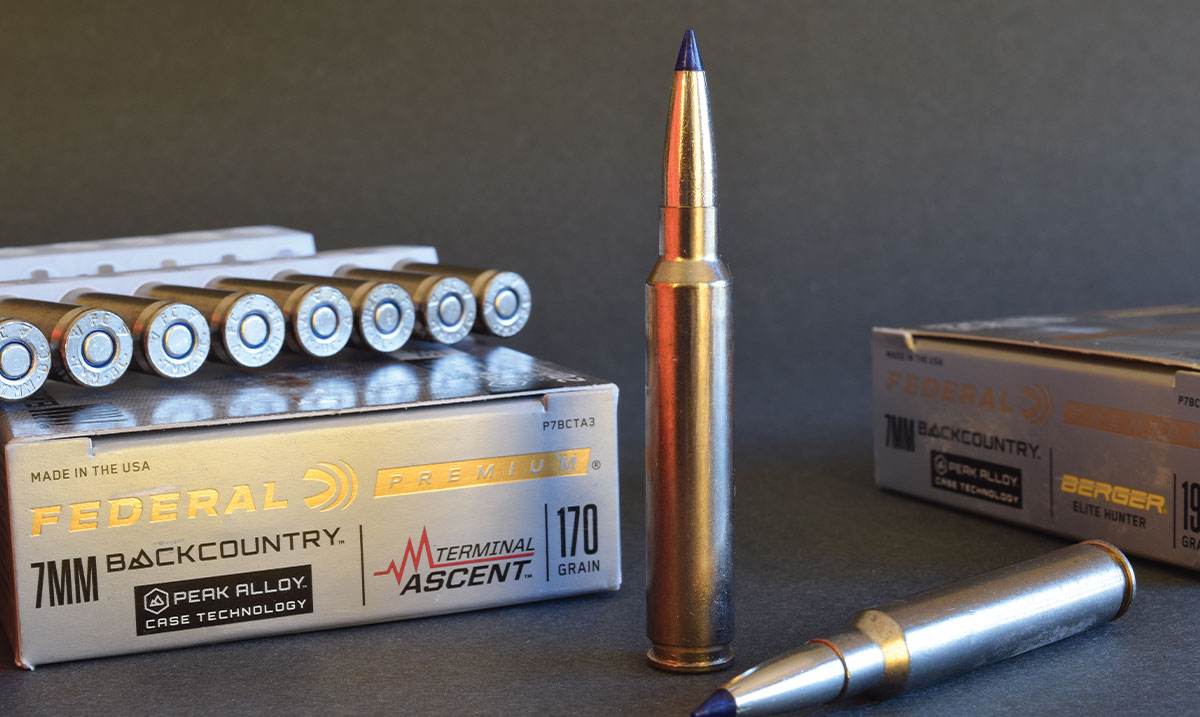
Frothier rounds chase the 6.5 Creedmoor. Fresh from its first season afield, Federal’s 7mm Backcountry has a larger but still compact Peak Alloy steel case. Bottling pressures of 80,000 psi, it hurls 170-grain Terminal Ascent bullets at 3,000 fps from suppressor-equipped 20-inch barrels. Berger’s 195-grain Elite Hunter is the heaviest of five factory-loaded bullets. Its BC is an astounding .755.
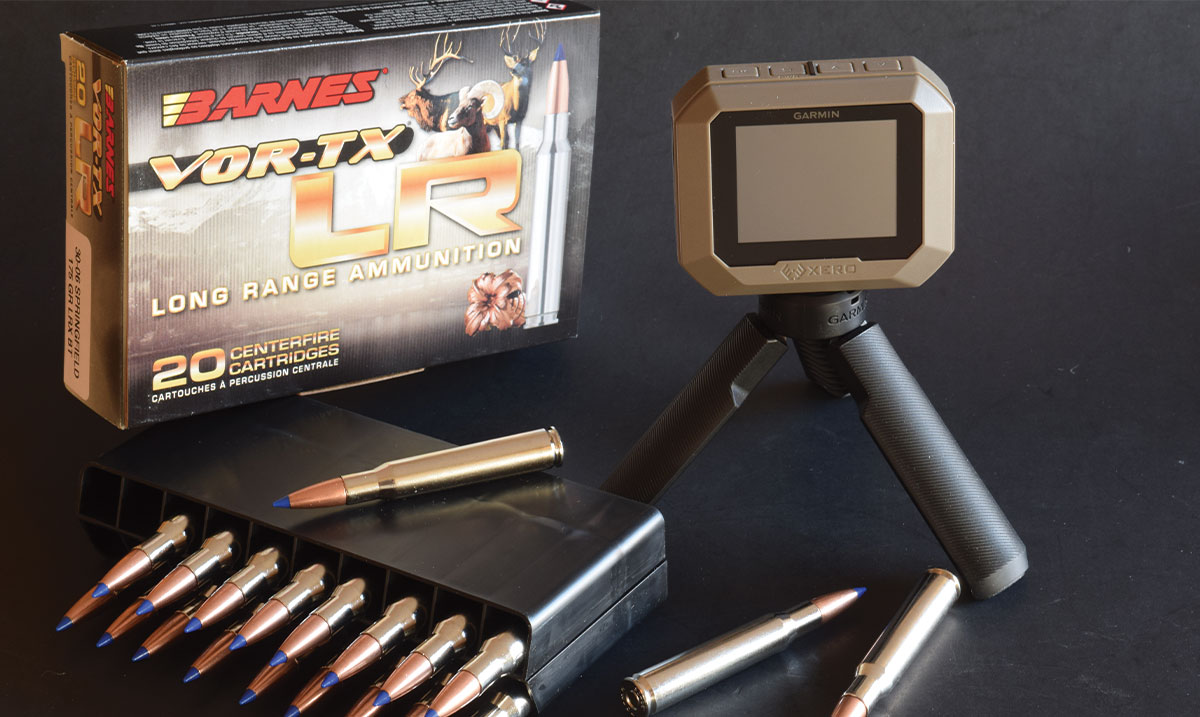
Federal has added Terminal Ascent bullets to its 6.5 PRC, .300 Win. Mag., and .300 RUM ammo, whereas Barnes LRX bullets serve the 6.5 Creedmoor, 6.5 PRC, .280 Ackley, 7mm Rem. Mag., 7mm PRC, 7mm Backcountry, .308, and .300 Win. Mag. Hornady’s 6.5 and 7mm PRCs (Precision Rifle Cartridges) trump the 6.5 Creedmoor’s case capacity. In sales, the 7mm is eclipsing the 6.5 PRC. Winchester’s 6.8 Western and the huskier .300 PRC trail both. A cohort of similar cartridges can limit rifle and ammo demand for each. How many boxes of PRCs and 6.8 Western, of 7mm Backcountry, 6.5 Weatherby RPM, and .26, .27, .28 and .30 Nosler dare you stock?
Hornady has fashioned several high-octane cartridges for AR-15s. The 6mm ARC, sired by the .22 ARC, features game bullets that fly within a vertical inch of the .243’s and send 1,000 foot-pounds 400 yards. The .338 ARC came available mid-2025, with 175-grain bullets at 2,075 fps, 307-grain Sub-Xs at 1,050.
Remington’s 2026 focus is on Core-Lokt, a bullet dating to 1939. New Tipped Lever Gun ammo for the .30-30, .32 Special, .35 Rem., .360 Buckhammer, and .444 Marlin and .45-70 feature Core-Lokts with flat poly tips. These offer slightly higher BCs than traditional bullets. Bill Wilson’s AR-bred .300 Ham’r has earned a 125-grain Core-Lokt, Winchester’s .400 Legend a 210-grain. A 180-grain Core-Lokt Tipped in the .300 RUM clocks 3,150 fps.
Premier-series ammunition from Remington includes 10 Long Range loads, 6.5 Creedmoor to .300 PRC, with Speer Impact poly-tip bullets. A dozen more, .243 to .300 RUM, feature Swift Sciroccos. Varminters get another dozen, .17 Fireball to .243, with Accutip-V missiles. Remington catalogs a 260-grain big-bore Accutip in .450 Bushmaster loads. CuT copper alloy poly-tip bullets define the company’s lead-free line: 6.5 Creedmoor, 6.5 PRC, .270, 7mm-08, 7mm Rem. Mag., 7mm PRC, .308, .30-06, and .300 Win. Mag.
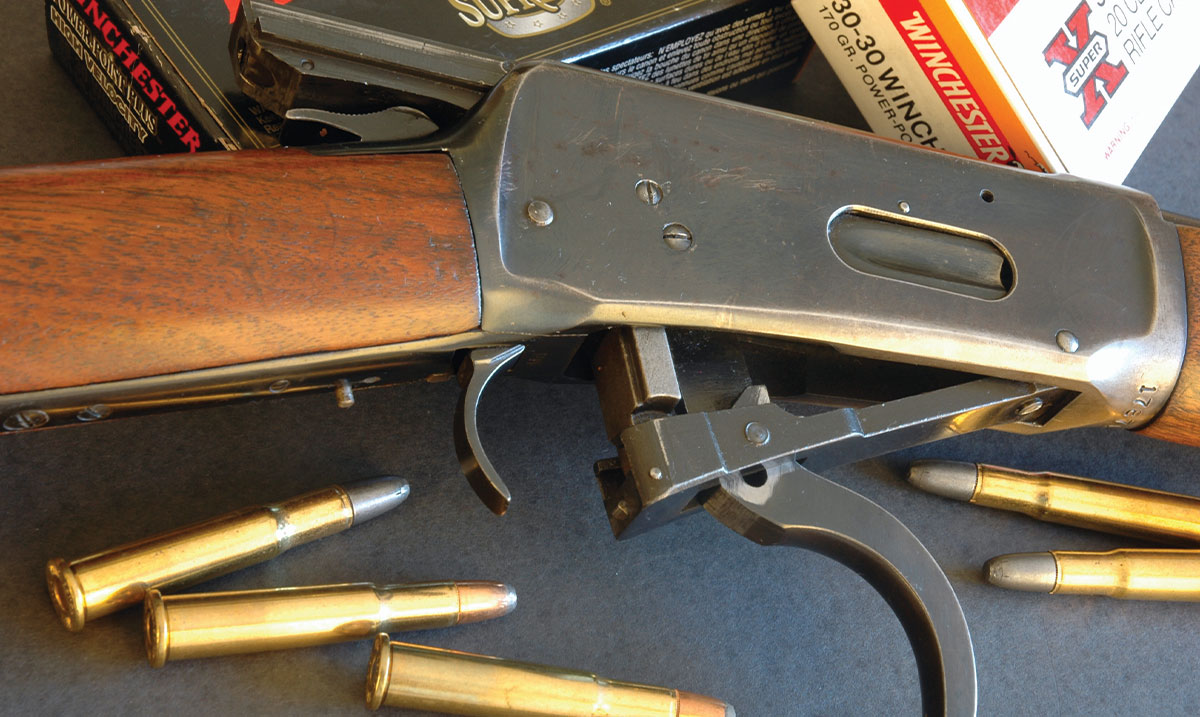
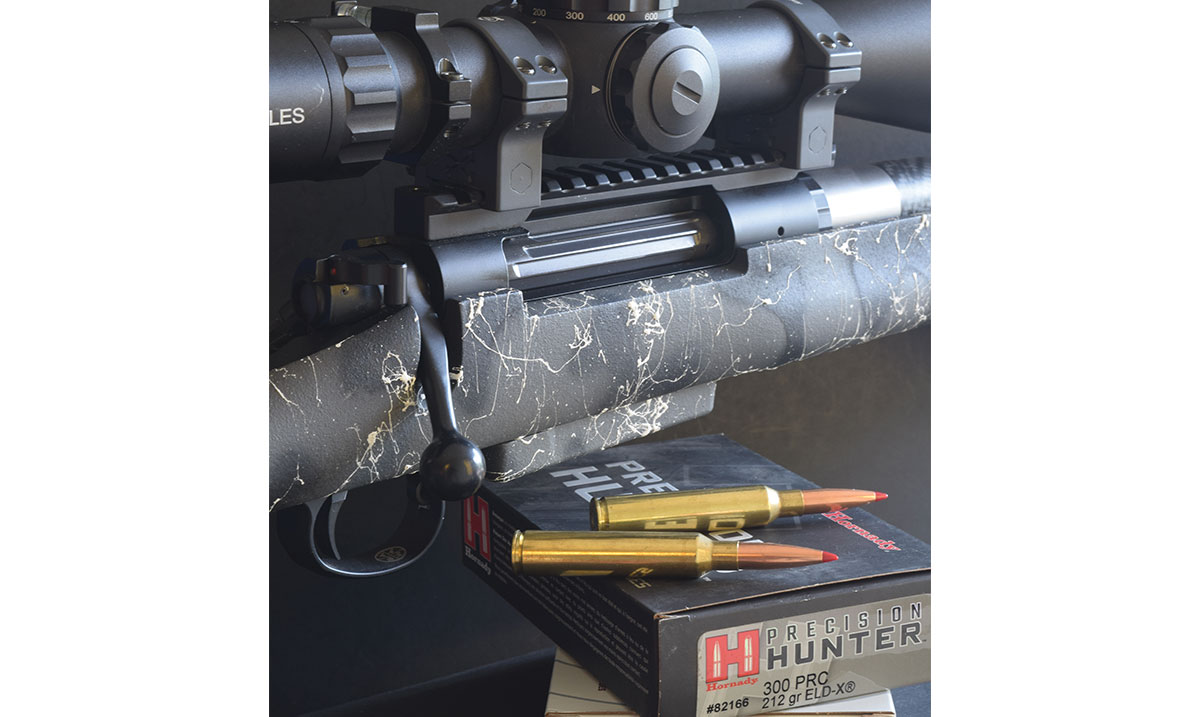
Appealing loads won’t sell if they escape notice. Etiquette, house rules, and state regulations keep customers from behind gun counters, where at any moment a clerk may be busy. Make boxed ammo easy to see, in logically organized stacks. Ensure box flaps with load ID face out. Not all box labels are legible from across the counter. The box for one of my favorite loads must be in hand to reveal “.25-06.” Assist customers with shelf placards for cartridge classes. Use bold fonts, as if calling attention to sale prices.
Don’t dismiss shoppers asking for a box of “your cheapest ought-six.” Satisfied deer hunters may later plan safaris or make your shop headquarters for other shooting supplies. A box of ammo can draw a casual hunter into our industry—and reward you with many visits.
Bear Essentials
More hunters in the Mountain West are packing sidearms with their bear spray. But hunting loads with jacketed hollow points can fail to breach a grizzly’s grille. Better, insist survivors, are non-expanding bullets that ensure penetration.
Black Hills Ammunition stokes an 100-grain 9mm Honey Badger to 1,250 fps. While its 347 foot-pounds won’t doom hard-cast .44 Magnum loads to obsolescence, this copper bullet drills straight and deep. You can pack 12 or 15 in a pistol half the weight of an N-Frame S&W. Importantly, bears are more impressed by a 9mm in hand than by a .44 in camp. BHA lists 10 Honey Badger loads, .32 to .45.
Federal’s Cast Core loads have been replaced by a Solid Core line. Its flat-nose, hard lead bullets have more rounded ogives and tough polymer jackets to limit bore friction. The six Premium Solid Core loads: an 147-grain 9mm at 1,120 fps, an 180-grain .357 Magnum at 1,400, a 200-grain .40 S&W at 1,000, a 200-grain 10mm at 1,200, a 300-grain .44 Magnum at 1,300, and a 240-grain .45 ACP+P at 1,000.
Hornady’s DGH (Dangerous Game Handgun) bullets in its new Backcountry Defense ammo have long shanks—a nod to sectional density. Each jacket is folded over the rim of the dished nose to secure a lead core. This series boasts an 138-grain 9mm+P DGH at 1,150 fps, an 165-grain .357 Magnum at 1,510, a 200-grain 10mm at 1,160, a 240-grain .44 Magnum at 1,620. There also are also loads for the .454 Casull and .460 and .500 S&W.
The Barnes Saga
Barnes is now loading Sierra bullets. Why? In 1932 Fred Barnes began making lead-core game bullets in Bayfield, Colorado. Handloaders hailed their deep penetration in tough beasts. In 1974 Randy and Coni Brooks bought the company and moved it to American Fork, Utah. Then Randy pondered a solid-copper hunting bullet with a hollow nose. In 1989 he and Coni introduced the X-Bullet. The Triple-Shock (TSX) came in 2003, with relief cuts that reduced bore contact and improved accuracy.
Sierra, established by Frank Snow, Loren Harbor, and Jim Spivey, began making bullets in 1947 in a California Quonset hut. Martin Hull planned its ballistics lab and ran it for 20 years. The Leisure Group became Sierra’s parent in 1969. LG’s manager Bob Hayden helped grow Sierra, which in 1990 moved to a new factory in Sedalia, Missouri. There its MatchKing bullets sired GameKings.
In 2010 Barnes Bullets sold to the Freedom Group, which owned Remington. Financial failings sent the gunmaker into Chapter 11 bankruptcy. Dissolution of the Remington Outdoor Company in fall 2020 put Barnes up for sale. Sierra bought it for $30.5 million, bringing Barnes under the umbrella of the Clarus Corp., Sierra’s owner. In 2024 Clarus sold Sierra and Barnes to Bullseye Acquisitions, an affiliate of JDH Capital. Component bullets of both brands still sell independently.