

The Business Compass
Knowing where you are, and where you want your business to go, is essential to success.
By Miles Hall
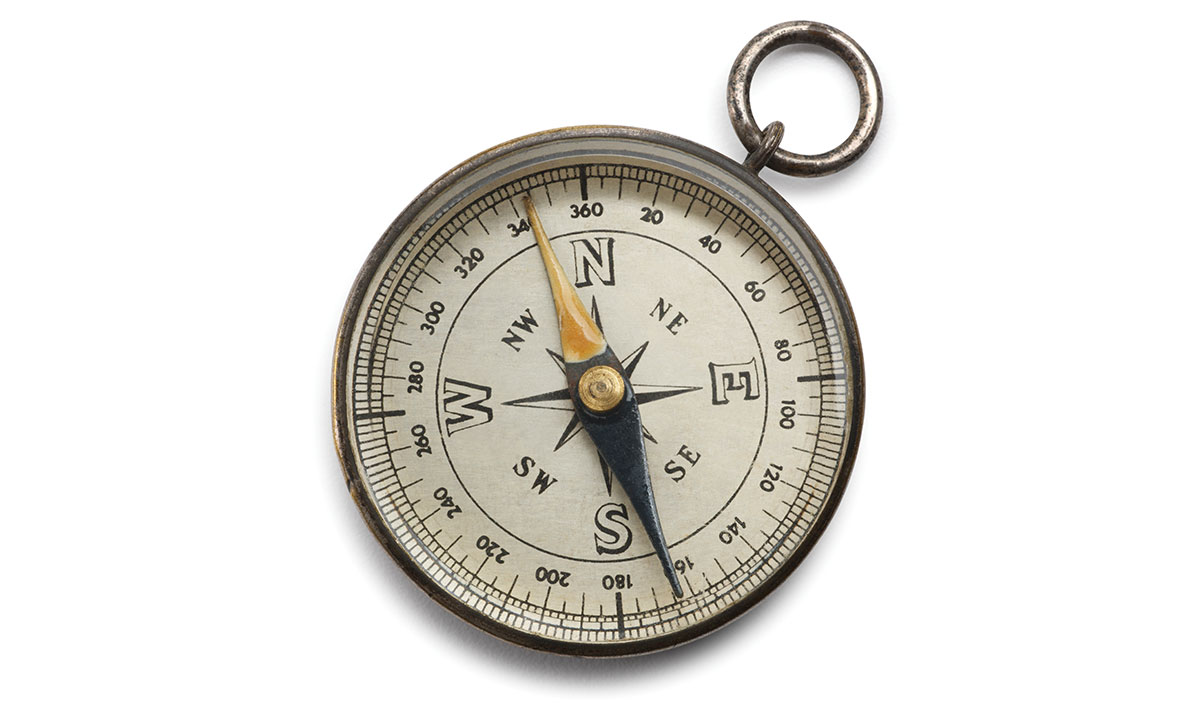
A compass is one of life’s greatest tools, and I was taught how to use it when I was a Cub Scout. The question put to us was, “Why do you use a compass?” Our pack’s answer was “So, you don’t get lost.” Then we had to use them for a fun (and also a bit scary for a nine-year-old) outing. But that outing taught us valuable lessons about understanding where you were and how to get to where you wanted.
Today our phones, watches, and cars all have a compass built right in. The core of the GPS is a compass. You have one in your operation, too. It may not be a mechanical device, but it sits between your ears. You had vision and a plan when starting or leading the business you have now. The concept of the term “business compass” is a powerful tool. It can be a diagram, chart, or report that points very clearly to what your business does and why it does it. That information helps you set the direction of the business. Sadly, many enterprises do not have a compass of any sort. They have ideas, but not much more. That, my friends, is called drifting, and it won’t get you anywhere. This was exactly where Jayne and I were all those years ago. We had the idea, but not much more. Then I remembered the compass training. Success is so much about navigation and guidance; they allow you to focus on the goals, values, and protocols you have set in motion. How you get that information becomes the next step.
When we started the business in the early 1980s, we did not have the computer and internet access like we do today. So, we did the next best thing. We asked our current guests, as well as potential guests, a series of questions and then listened to their answers. The excitement of these folks when we sincerely asked for their input amazed us. No one in this market had done that. And, boy, did we get answers—all of which acted as compass headings that allowed us to set a direction.
A gun-rental program was something at the top of the list. Nothing like it was in place in those days, so we set one up. Eventually, we had over 100 different models that our guests could shoot at our range in a “try before you buy” program. It was incredibly successful. Providing lessons and training was next, so we set those up as well.
One surprising “compass reading” came from our international guests. They requested that range rules and other forms be available their native languages. We ended up creating documents in seven languages. Doing so created an enormous feeling of good will and respect, which ultimately translated into higher sales. One enlightening story I want to share came after the NICS operation went into effect. The leadership team at NICS reached out to me, and a couple of other dealers I pointed them to, on what kind of data we would like for them to collect. This was not an easy ask, as there were plenty of folks worried about the government collecting anything. In our case, we knew that some data, such as the number of units sold—either long gun or handgun—broken down by state, would be very helpful to have in hand.
At this stage, we were still a small operation that sold mostly handguns. The NICS data was a shocker. Back then in Oklahoma three long guns were sold for every handgun. We were missing a full 75 percent of the market. The NICS data helped us totally change and refocus on the firearms side of the business. We could now take the NICS state numbers, compare them to what we were selling, and learn our market share.
Here’s an example of what I’m talking about, using an Excel work sheet. Lay out months on the left side and years on top, with three rows for each year. Track your unit sales by month in the first column. In the second column input the NICS numbers. The third column is your market share.
Overall # Units Sold
YEAR Month OA # Units Sold / State NICS / Market Share Jan 200 2000 10.00% Feb 158 1980 07.97%
*****
Handgun # Units Sold
YEAR Month HG # Units Sold / State NICS / Market Share Jan 100 1250 08.00% Feb 068 1090 06.23%
*****
Long Gun # Units Sold
YEAR Month LG # Units Sold / State NICS / Market Share Jan 100 0750 13.33% Feb 090 0890 10.11%
The more you track, the better the picture you will have. You may not have NICS data, but tracking sales and number of units will help greatly. The Simple Truth is a Business Compass helps you choose the correct path by allowing you to make decisions on trusted data rather than a hunch. I would be happy to send you the NICS numbers cleaned up for your state. Just email me at Miles@HallnHall.com

Author bio: Miles Hall was founder and president of a multi-million-dollar firearms retail store and gun range in Oklahoma for 36 years. He is now a senior advisor helping FFL dealers around the country run more efficient, profitable, and impactful businesses. (miles@hallnhall.com)
The more you track, the better the picture you will have. You may not have NICS data, but tracking sales and number of units will help greatly. The Simple Truth is a Business Compass helps you choose the correct path by allowing you to make decisions on trusted data rather than a hunch. I would be happy to send you the NICS numbers cleaned up for your state. Just email me at Miles@HallnHall.com.